
Aluminum vs Stainless Steel for CNC Machining in China: A Decision Table for the Sourcing Engineer
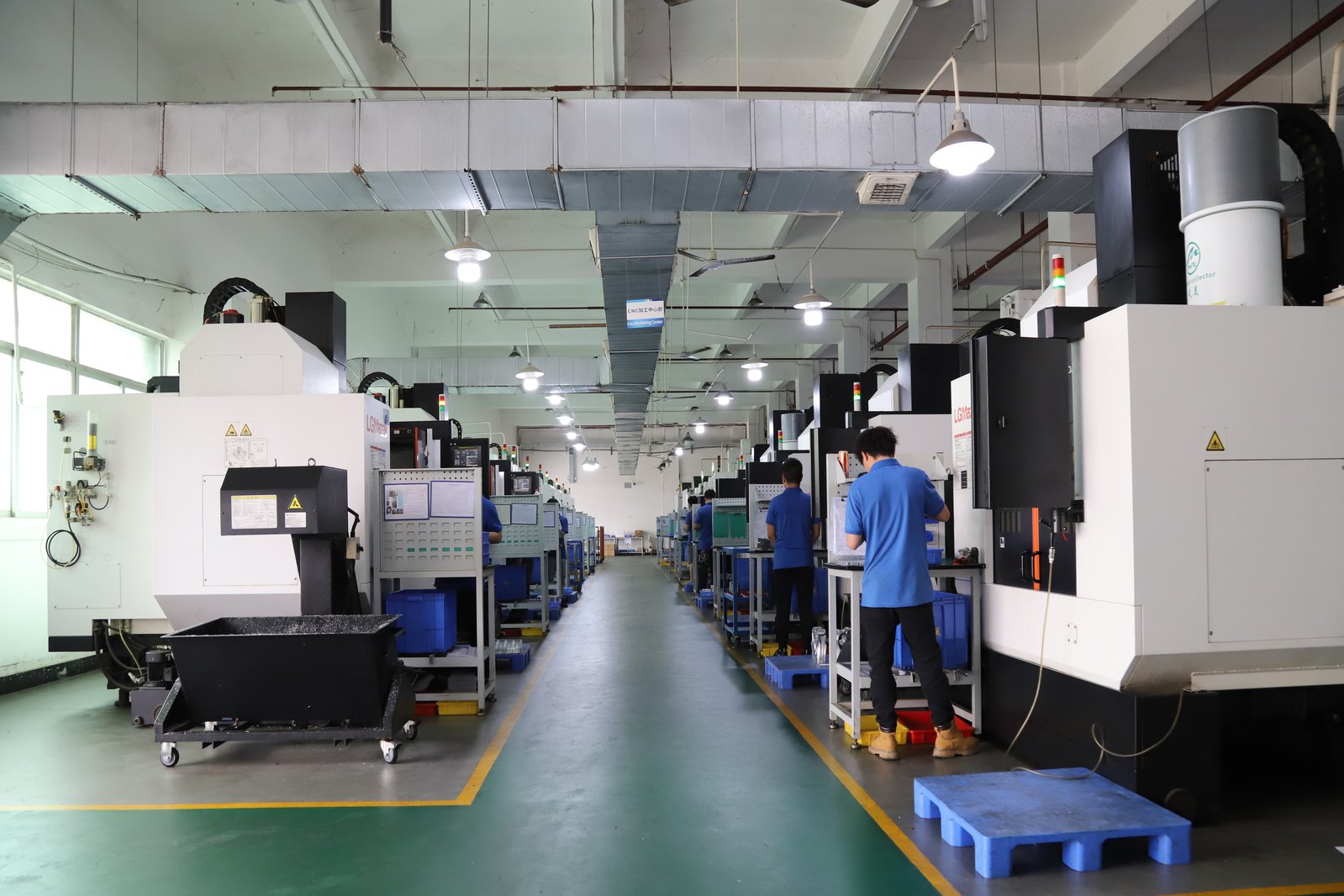
Half the material debates on a machined part never needed to happen. The part either carries load in a corrosive environment — and stainless steel earns its weight — or it does not, and aluminum 6061-T6 cuts faster, costs less, and weighs a third as much. The decision is not about which metal is "better"; it is about which one survives the part's actual service conditions at the lower total cost, including the machining, the finishing, and the China sourcing overhead. This guide is the sourcing engineer's decision table for aluminum versus stainless steel — the weight, strength, corrosion, machinability, and finishing comparisons that settle the argument, the grades worth specifying on each side, and the verification checks that make sure the material on the drawing is the material in the part when the order crosses a border.
Why does the material decision have to be made before the China quote?
The material decision changes every number downstream of it — the cycle time, the tool wear, the finishing step, the inspection, and the freight. A part that could live as 6061-T6 but gets quoted in 304 stainless costs more to cut, takes longer to machine, and arrives heavier, all for a property the application never needed. A part that genuinely needs stainless but is drawn as aluminum will corrode in service, and no machining quality fixes a wrong material. When the shop is in China, the cost of a wrong material decision is amplified by distance: the reorder cycle is measured in weeks, not days.
The decision table below is the shortcut. Read down the left column for the dimension that matters to your part, find the metal that wins it, and then check the service conditions to confirm the winner is not disqualified by a dimension lower in the table.
| Decision dimension | Aluminum wins when | Stainless steel wins when |
|---|---|---|
| Weight | Weight-critical parts — brackets, housings, anything carried or moved | Weight is secondary to strength or corrosion |
| Strength | Moderate loads on a stiff, well-supported structure | High loads, impact, fatigue, or thin sections needing steel's modulus |
| Corrosion | Indoor, dry, or painted/anodized environments | Salt, moisture, chemicals, food contact, or outdoor service |
| Machinability and cost | Aluminum cuts fastest — lower cycle time, less tool wear, cheaper per part | Stainless cuts slower and costs more; specify it only where service demands it |
| Thermal and electrical | Heat sinks, enclosures that shed heat, electrical chassis | High-temperature service where aluminum's strength falls off |
| Finishing | Anodizing gives a hard, colored, corrosion-resistant surface | Passivation or electropolish for cleanability; plating for wear |
The two metals are not in competition for most parts; they serve different service envelopes. The table exists to make the envelope explicit before the material goes on the drawing.
Which aluminum grades should the drawing name, and what does each cost to cut?
When the decision lands on aluminum, the grade matters as much as the metal. The alloy family splits three ways for a buyer: 6061 for general structural work, 7075 for strength where weight still matters, and 5052 for sheet and corrosion duty. 6061-T6 is the sensible default for most machined parts — it cuts fast and cleanly, anodizes evenly, and costs the least per part of the common aerospace-capable alloys. 7075-T6 is roughly a third stronger, specified where load and weight meet, and it is gummier and more expensive to cut. Where a part must hold shape after heavy material removal, 6061-T651 — stress-relieved by controlled stretching after solution treatment — is the specification that keeps a machined plate flat.
Aluminum's finishing step is its own decision. Anodizing — Type II for corrosion and color, Type III for a hard wear surface — grows a thin oxide layer from the aluminum itself, and the anodize layer removes a small amount of dimension from the part. A drawing that calls out anodizing has to account for that allowance, and a buyer sourcing from China should confirm the anodize is applied to a known spec with a measured thickness.
Where an aluminum part is headed for a harsh enough environment that stainless looks tempting, check whether the part is really the right candidate for either metal. A part that needs stainless's strength as well as its corrosion resistance, at a weight the structure can carry, is a genuine stainless part. A part that only needs to survive a damp indoor environment is often better served by anodized aluminum than by paying for stainless's machining time and weight — the anodize provides the corrosion protection, and the aluminum provides the fast cycle and the low freight cost.
Which stainless grades should the drawing name, and when does the metal earn its cost?
When the service environment demands stainless, the grade decision splits the way the aluminum family does. 303 is the free-machining grade — the fastest stainless to cut, and the right choice where corrosion requirements are modest. 304 is the general-purpose corrosion grade, the default for parts that must resist rusting in ordinary service. 316, and its low-carbon sibling 316L, add molybdenum for resistance to salt, chlorides, and chemicals — the grade for marine, chemical, and food-contact parts. 17-4 PH is the precipitation-hardening entry, machined annealed and then aged to a range such as H900 or H1150 for high strength.
The machining reality is that stainless sits far below aluminum on the machinability ladder. It cuts slower, wears tools faster, and generates heat in the cut, and the harder grades are the slowest of the family. The discipline is to specify the grade the environment demands and no harder, because every step up the stainless ladder is paid for in machine time. A 303 where the environment does not demand 316's corrosion resistance is a faster, cheaper part with no loss in function.
How do the two metals behave differently under the cutter and in inspection?
The machining difference is not subtle, and it shows up in the quote before the part. Aluminum is the fastest metal to cut on a machining floor: light cutting forces, fast spindle speeds, minimal tool wear, and an as-cut finish around Ra 1.6–3.2 µm. Stainless demands slower speeds, tougher tooling, and more rigid setups; it work-hardens if the tool dulls, and it holds the heat in the cut. A 6061 bracket and a 316 bracket of identical geometry are different jobs on the same machine.
Both metals hold ±0.003 mm on rigid features, and precision grinding reaches ±0.002 mm on either, but the effort differs. Aluminum holds the band with light passes and a fast cycle; stainless earns the same number with slower feeds, more rigid workholding, and closer attention to tool wear. In inspection, the two metals demand different evidence: aluminum parts headed for anodizing need the anodize thickness verified and the pre-coat dimension confirmed, while stainless parts need the grade verified, because a 304 part and a 316 part look identical and measure identically. The check is material verification at goods-in — XRF-reading the incoming stock against its mill certificate, so the grade on the drawing is the grade in the machine.
The tolerance and finish behavior also sets a practical boundary on the drawing. Where a design calls out a tight tolerance on a stainless part, the cost of holding it is a stainless cost — slower passes, more CMM time, more risk of rework — and a sourcing engineer comparing materials should price that, not assume the tolerance is free on either metal. On thin sections, the metals diverge further: a thin aluminum wall is a deflection risk, while a thin stainless wall is stiffer but heavier, and the weight penalty compounds across an assembly that ships by air freight.
Which sourcing checks protect the material decision across the border?
Sourcing aluminum or stainless machined parts from China adds one discipline: verification. The risk is not that Chinese factories substitute material deliberately — most do not — but that a substituted alloy is invisible to every dimensional check. Three checks protect the decision. First, the mill certificate: the drawing names a grade and temper — 6061-T6, 7075-T6, 304, 316L, 17-4 PH H900 — and the incoming lot carries a certificate for that exact specification. Second, XRF verification: the shop reads the incoming stock against the certificate at goods-in, closing the gap between what the mill intended and what the machine receives. Third, the finishing record: anodizing for aluminum and passivation for stainless are process steps with their own logs, and the lot record should show the step named on the drawing actually happened.
The CNC machining guide on this site walks the full drawing-to-quote path, and the quality verification page names the instruments behind material and dimensional checks. The material decision is the first fork in that path, and it is worth making deliberately: name the grade and temper, verify it at the gate, and let the metal earn its place in the part's service environment rather than in the drawing's default settings. Done that way, the material decision stops being a debate and becomes a documented fact that the quote, the batch record, and the receiving inspection all agree on.
Frequently Asked Questions
Should my part be aluminum or stainless steel?
Ask what the part faces in service. If it must resist salt, chemicals, moisture, or food contact, stainless earns its weight. If it is an indoor structural part where weight and cost matter, aluminum 6061-T6 cuts faster, weighs a third as much, and costs less. Corrosion is the deciding dimension.
Is aluminum as strong as stainless steel?
No. Stainless is roughly three times as dense and significantly stronger, which is why it wins high-load, impact, and fatigue applications. Aluminum 7075-T6 narrows the gap and is specified where strength per gram matters, but for raw load capacity stainless is the choice.
Why is stainless so much more expensive to machine than aluminum?
Because it cuts slower, wears tools faster, and holds heat in the cut. Aluminum is the fastest metal to machine on a typical floor; the austenitic grades — 304, 316 — sit far down the machinability ladder, and the premium shows up in cycle time and tool cost.
Which stainless grade should I specify?
303 if corrosion requirements are modest and speed matters. 304 as the general-purpose corrosion grade. 316 or 316L where salt, chlorides, or chemicals are present. 17-4 PH where high strength after heat treatment is required. Specify the grade the environment demands and no harder.
Is anodized aluminum corrosion-resistant enough to replace stainless?
For indoor and many outdoor applications, yes — Type II anodizing gives aluminum a hard, corrosion-resistant surface. For salt, chemical, or food-contact service, stainless remains the choice. Anodizing is a surface treatment, not a material upgrade.
How do I verify the alloy and temper before the batch ships?
Ask for the mill certificate for the specific grade and temper, and confirm the shop XRF-checks the incoming lot against it at goods-in. A substituted alloy passes every dimensional check, so material verification is the only check that catches it.
Does anodizing change the dimensions of an aluminum part?
Yes, slightly. The anodize layer grows from the surface and removes a small amount of material, so a part that must hold a tight tolerance after anodizing needs the pre-coat dimension planned on the drawing.
What should I send to get an accurate quote for an aluminum or stainless part?
Send the STEP or IGES model and the toleranced 2D drawing naming the grade and temper — 6061-T6, 7075-T6, 304, 316L, 17-4 PH with its condition — plus the finishing requirement and the service environment if it is unusual.
Can the same design be quoted in both aluminum and stainless for comparison?
Yes, and it is a useful exercise when the material decision is close. Ask the shop to quote the same geometry in 6061-T6 and in 304, with the same tolerance scope, and compare total cost including finishing. The gap between the two quotes is the price of stainless's corrosion resistance, and whether the part's environment is worth that price is then a decision you can make with numbers in hand.
Not sure whether your part should be aluminum or stainless?
Send the STEP or IGES model and the toleranced 2D drawing to [email protected] or call +86 13126536955. The reply will include a material recommendation based on the service conditions, the grade and temper to specify, and a quote that prices the metal the part actually needs.