
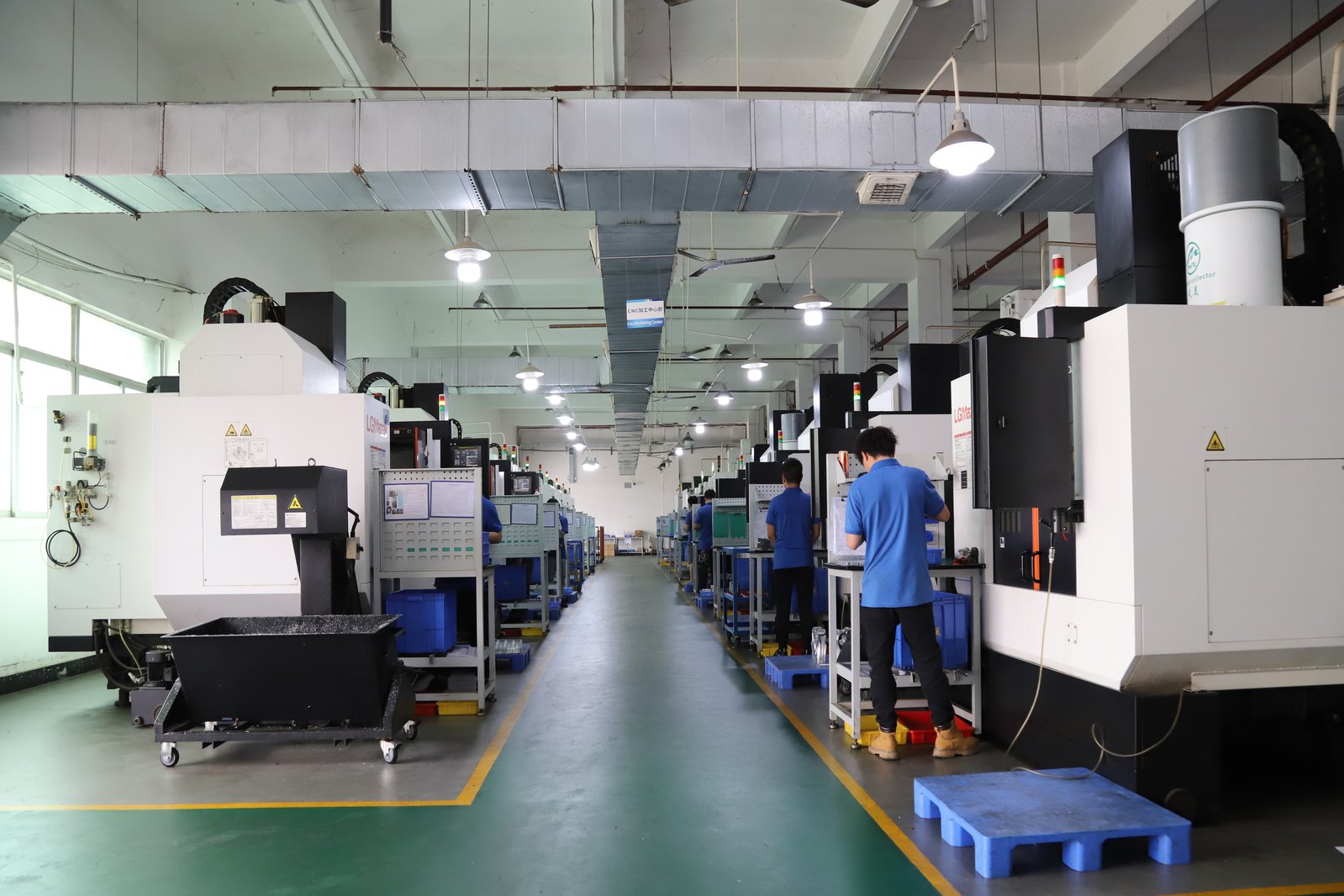
Sourcing CNC machining from China without a site visit is a skill, and it is a skill built on staged qualification rather than instinct. The buyer who wins is the one who treats every email, every document, and every sample as a piece of evidence in a deliberate sequence: a structured request for information, a documented review of the quote, a remote audit of the floor and the records, and a small trial order designed to test the supplier's behavior under a real schedule. This guide lays out that sequence for CNC machining China sourcing, so the payment that ends the sequence is backed by a chain of evidence rather than a leap of faith.
What should the first information request look like when you approach a supplier?
The first request sets the tone of the whole relationship, so it should be a structured RFI rather than a scatter of questions. Ask the supplier to introduce the company in a fixed format: the legal entity and plant address, the years in operation, the machine list with axis classes, the quality systems with their scope and registrar, and the industries it currently supplies. Add the process questions that matter to your part: which machine classes run turned and milled work, which finishing and treatment steps are in-house, and which are coordinated partners. The format matters because it lets you compare answers across suppliers on the same grid.
Read the responses as evidence of how the supplier will handle your order. A complete, specific answer shows an organization that answers questions professionally and has nothing to hide; a short, vague answer shows a supplier that will be vague again when your part is late or wrong. Note who signs the response and whether it comes from an engineer or a sales desk, because the person who answers your RFI is the person who will answer your drawing questions later. The RFI is not a formality — it is the first sample of the supplier's documentation, and it predicts the documentation your order will receive.
How do you verify the company and the floor from a distance?
Verify the company layer with public and documentary checks before any money moves. Confirm the legal entity on the quotation matches the registration and the plant address, and that the entity operating the machines is the entity you are contracting with — trading intermediaries should declare themselves rather than impersonate a factory. Ask for the plant's external registration documents and, where the industry uses them, its quality certificates with the scope and the registrar named. A supplier that has nothing to hide produces these without friction; one that hesitates is telling you something about how it would handle a quality audit later.
Then verify the floor with a live video walk-through, and make the call work like an audit rather than a tour. Ask to see the machining floor with machines in cycle, the bar and plate stock with material markings, the inspection room with the instruments named in the quality records, and the packaging area. Ask questions that depend on what the camera is showing — the brand of the machine in the corner, the material stacked by the lathe, the part numbers on the work in progress — and listen for answers that come from the floor rather than a script. A live call cannot be staged the way a photo gallery can, and the small inconsistencies are where the fiction gives itself away.
Run the walk-through on a working day and at a working hour, and note whether the supplier can accommodate it without a long lead time or a list of conditions. A factory that is genuinely producing can point a camera at its floor on short notice; one that must prepare the scene is telling you the scene does not exist in daily operation. Ask to see the same areas you requested, in the order you requested them, and resist the polished tour that skips the stock room or the inspection bench. The details a tour avoids are usually the details that matter — the segregation of certified material, the calibration stickers on the gauges, the housekeeping around the machines — because they are the details that a busy, honest floor gets right without being asked.
What records should the supplier produce to prove the quality system is real?
Ask for a coherent set of records rather than a single impressive document. An incoming material verification record shows how stock is checked against its certificate. A first-article report from a completed job shows how new parts are qualified. A dimensional report with measured values shows how lots are verified, and it should name the features, the values, and the instruments. A calibration schedule for the measuring equipment shows that the instruments behind the numbers are trustworthy. A corrective-action record shows how nonconforming lots are caught and prevented from repeating. Each record is easy to produce when the system exists and difficult to fake convincingly across the whole set.
Match the records to the tolerance claims the supplier makes. If the floor holds turned and milled features to ±0.003 mm and grinding to ±0.002 mm, the dimensional reports should show values inside those bands with capability at Ppk ≥ 1.67 at the initial study on the key characteristics. If the supplier claims ISO 9001:2015, IATF 16949:2016 (product design excluded), or ISO 14001:2015 systems, the scope and the registrar should be verifiable. Read the records for the pattern behind them — a supplier that measures the same characteristics across different jobs is running process control; one whose reports vary with each sales pitch is assembling documents for show. The records are the quality system made visible, and they are worth more than any brochure paragraph.
What should an auditable quote for CNC machining from China include?
An auditable quote itemizes the work in lines that map to the drawing and the agreed scope. The material line names the grade, the condition, and the form, with the certificate that accompanies it. The machining line describes the operations the routing requires, named by process and machine class. The finishing and treatment lines state what happens after cutting and who performs it. The inspection and documentation line names the reports that ship with the lot. And the commercial lines state the lead-time tier, the freight term, the revision procedure, and the payment schedule. When the lines are visible, the quote can be checked against the drawing line by line.
Read the quote for the assumptions hiding in the missing lines. A material grade without a condition is a price that shifts when the certificate arrives. An inspection line that is absent means the dimensional report will arrive as a change order. A freight term that is unstated means the risk sits wherever the supplier decides it sits. A lump-sum quote is not a price; it is a promise whose anatomy the buyer discovers at delivery, after the deposit has moved and the leverage is gone. The discipline of asking every supplier to itemize the same scope is what turns a stack of quotes into a comparison, and the comparison is where the real price differences become visible.
How do you design a trial order that actually tests the supplier?
The trial order is the final exam, and its design determines what it proves. Keep it small enough that a failure is affordable and large enough that the supplier treats it seriously. Put it on a drawing that exercises the capabilities you will rely on — the material, the tolerance content, the finish, and the documentation list you specified in the RFQ. Require the first-article report before production runs, with measured values on every toleranced feature, and hold production to your written approval. Track the actual behavior against the promises: the lead time against the quoted tier, the document quality against the samples, the communication speed against the RFI response.
Measure the trial order on the behaviors that predict the program, not just the parts. Did the supplier flag a drawing problem before cutting, or discover it after? Did the first article arrive complete on the first pass, or after several corrections? Did the dimensional report match the parts in the box, or was it a template with your part number? A trial order that passes on the parts but fails on the behaviors has told you how the volume order will go. The trial order is the cheapest full test of the relationship, and its cost is a rounding error against the cost of discovering the supplier's real behavior across a production program.
What payment structure should back the staged qualification?
Match the payment structure to the qualification stages so money never moves ahead of evidence. A modest deposit confirms the trial order and buys the material. A second release follows the first-article approval and the start of production. The balance releases against the inspection records and the shipping documents. On the first order the deposit should cover the supplier's real exposure — material and booked capacity — and no more, and the milestones should be written into the order so there is no ambiguity about what releases what. The structure works because each payment is earned by a documented event, not by a promise.
Name the commercial terms around the milestones in the same document. State what happens if the first article fails and who carries the correction cost. State which documents release the final payment, so the inspection report cannot be withheld as leverage after the parts ship. State the freight term and what it shifts to each side. And state how revisions are handled, because a drawing change mid-program is a real event with a real price. A supplier that accepts milestone payments against documented evidence is confident the process will earn them; one that demands a large upfront percentage before showing anything is asking the buyer to carry the risk the supplier does not want.
How do you carry the qualification into the repeat order?
The qualification does not end with the trial order; it matures into the baseline for everything that follows. The first-article report, the capability data, and the dimensional records from the trial order define the standard the supplier has demonstrated, and the repeat order should be held to that standard in writing. Compare the second order's records against the first on the same lines, and ask the supplier to explain any drift before it becomes a pattern. The fixture, the program, and the measured first-article data from the trial order should carry into the repeat price, because the learning belongs to the program, not to a single purchase.
Keep the evidence organized as the relationship's institutional memory. The RFI response, the records, the trial-order reports, and the arrival inspection together form a file that survives staff changes on both sides and keeps the program stable when people move on. The next buyer who picks up the program reads what was demonstrated rather than renegotiating it from memory, and the supplier knows what is watched because it was watched from the first request. A CNC machining relationship built on staged qualification and documented evidence is one whose second order is cheaper, its third order smoother, and its failures rarer, because the supplier was qualified, not merely selected.
Use the same file to widen the program deliberately. Once the supplier has proven itself on the trial part, add parts that exercise the next level of the capability you will eventually need — a longer run, a second material, a tighter tolerance, an additional finishing step — one step at a time, with the first-article gate held on each addition. Each successful step extends the qualified scope, and each failure is contained to a small order rather than a production program. That staged expansion is how a buying relationship grows from a trial part to a full supplier without ever betting the program on an unproven capability. The discipline of the staged qualification is that the supplier earns each new part the same way it earned the first.
Frequently Asked Questions
How do I qualify a CNC machining supplier in China without visiting?
Work in stages: a structured RFI, public and documentary checks on the entity, a live video audit of the floor and records, an auditable itemized quote, and a small trial order with a first-article gate. Each stage earns the next, and payment follows evidence at every step.
Which records prove a Chinese machining supplier's quality system?
An incoming material verification record, a first-article report, a dimensional report with measured values, a calibration schedule, and a corrective-action record. A coherent set across jobs proves the system runs; a single impressive document proves nothing.
What tolerance evidence should the supplier show before quoting?
Dimensional reports with values inside the claimed bands — ±0.003 mm on turned and milled features and ±0.002 mm on ground features — with capability at Ppk ≥ 1.67 at the initial study on key characteristics and Cpk ≥ 1.33 on general characteristics. Capability is reported per characteristic: every report names the feature, its tolerance band, the sample size, the sigma method, and the study window and the instruments named.
What should a quote from a China CNC supplier itemize?
Material with grade and condition, the machining operations by process, finishing and treatment with the performer named, inspection and documentation, and the commercial terms — lead time, freight, revision procedure, and payment milestones. A lump sum hides the lines and the risk.
How big should a trial order be?
Small enough that a failure is affordable and large enough that the supplier treats it seriously. Put it on a drawing that exercises the material, tolerances, finishes, and documentation you will rely on, and hold the first article as the gate before production.
What payment terms protect a first order from a Chinese supplier?
A modest deposit to confirm and buy material, a release against first-article approval, and the balance against the inspection records and shipping documents. Define the failure, lateness, and revision terms in writing before the order is placed.
How do I keep a qualified supplier honest on repeat orders?
Hold the repeat order to the standard the trial order demonstrated, compare the records on the same lines, and ask for an explanation of any drift before it becomes a pattern. Keep the evidence file as the program's institutional memory through staff changes.
Starting a China CNC machining program and want the qualification answered before you pay?
Send the drawing, the material spec, and the annual quantity through the services page — the quote will itemize material, machining, finishing, and inspection, and the first article will prove the process before production runs.