
CNC Machining China Lead Times: What Drives Them and How to Plan
On a landed-cost model, lead time is a line item, not a footnote. The date a China CNC machining supplier quotes decides when your capital stops being inventory, whether an expedited shipment appears on your freight bill, and whether a seasonal ramp misses its window. A supplier that promises the same date for every part is not being fast — it is being optimistic, and optimism is a cost you absorb later. The honest tiers run roughly 3, 7, or 30 days by complexity, and the tier comes from process steps, not from the quantity you order. This guide explains what drives the date on a China machining quote, why the tier is the most reliable signal in it, and how to plan so the delivery you budget for is the delivery you get.
Why is lead time the line item most quotes get wrong?
Every quote has terms the supplier controls and terms it discloses. The unit price is certain because it is written down; lead time is uncertain because it depends on process control, honesty about the schedule, and disclosure of where the work is done. A capable supplier compresses that uncertainty, and the compression is part of what you are paying for. A supplier that cannot state a lead time tied to complexity is leaving the most volatile term on your landed-cost spreadsheet blank.
The lead-time quote is itself a signal. A single optimistic date for every part tells you the shop is quoting hope rather than schedule. Tiers that move with complexity — roughly 3, 7, or 30 days — tell you the shop has run enough parts to know where the days actually go: cycle time, fixture build, and secondary operations each consume calendar time that cannot be compressed without risk.
What does a realistic China machining lead time look like by complexity?
The tiers on a China CNC machining quote track the process chain, and each step inside the chain has a queue behind it:
- Simple parts — roughly 3 days. One or two operations, one material, as-machined finish. The schedule is a stock check, a short program, a cut, and an inspection.
- Standard parts — roughly 7 days. Multiple operations, moderate feature counts, standard tolerances. A second setup or a light surface pass, with the inspection burden counted in the calendar.
- Complex parts — about 30 days. Ten or more process steps, tight tolerances on several features, or finishing and heat treatment that leave the machining floor. A part that changes machines, or leaves the building for a process step, inherits a second queue before it returns for final inspection.
Ordering more pieces barely moves the date, because the routing is written once and the machine repeats it. Adding process steps moves the date a lot. The cost-driven version of the same rule: if the part can be simplified to reach a faster tier without losing function, both the price and the date come down together.
Which queues sit behind the date, and behind the landed cost?
A quoted lead time is the sum of four queues, and every one of them has a cost consequence:
- Material availability. Standard alloys in common bar and plate sizes move fast in a machining region; an exotic grade waits on its own supply chain. Every incoming lot is XRF-checked against its mill certificate, so the queue includes a verification step that protects the schedule from a substituted lot found after cutting.
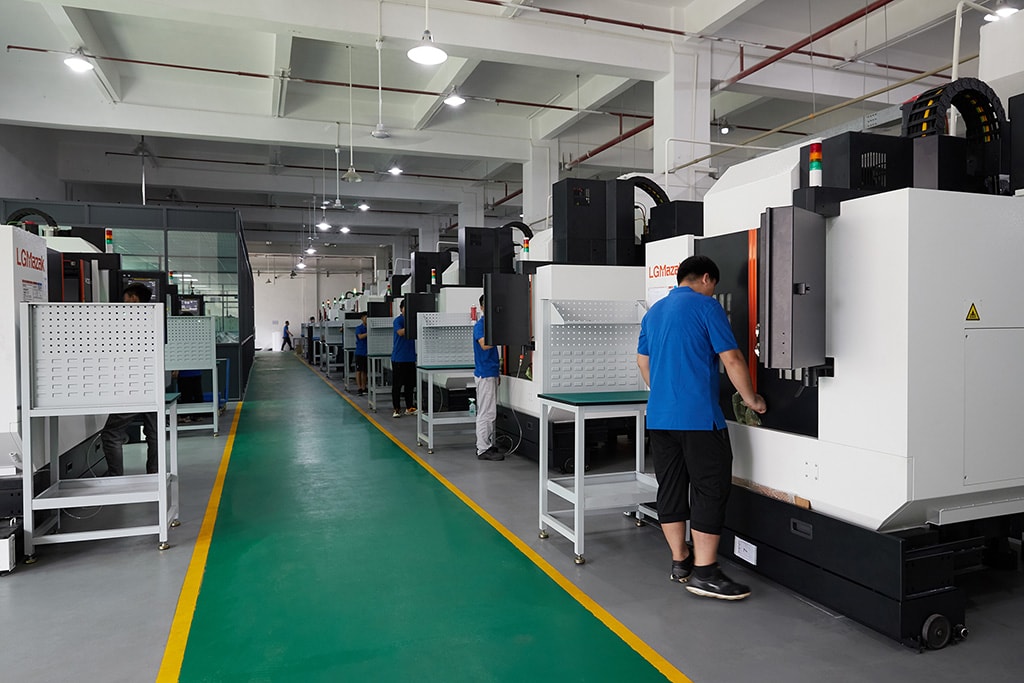
- Machine capacity. The floor runs 100+ machines across milling, turning, mill-turn, and grinding, which is what lets a job route around a bottleneck instead of waiting behind one. Capacity is booked in order, and a complex job waits for the machine group that can hold it.
- Finishing and heat treatment. Anodizing, plating, and heat treatment run on batch schedules, sometimes on a partner's floor and sometimes in-house where the plant owns the line. A part that leaves the machining queue joins another calendar before it returns for final steps, and a finish chosen after machining is how a thirty-day part becomes a forty-day one.
- Inspection and documentation. A capable process held to Ppk ≥ 1.67 at the initial study on critical characteristics and Cpk ≥ 1.33 on general characteristics. Capability is reported per characteristic: every report names the feature, its tolerance band, the sample size, the sigma method, and the study window., CMM verification, and the dimensional report that ships with the parts all sit between "machined" and "delivered." A part that carries first-article inspection carries its time.
This is why the same factory quotes three days for one drawing and thirty for another. The queues your part enters are the queues someone else's part does not, and the difference is geometry, not generosity.
Where does the schedule hide in the quote you are comparing?
Reading a quote for hidden cost is the same skill as reading it for hidden time, because both are written from the process count:
- The tier reflects complexity, not a single date. A quote that names one delivery window for every part has not priced your routing. A tier tied to your part's steps is a schedule; a flat date is a guess wearing a calendar.
- The finish line is named. Finishing and heat treatment are where the long tier lives. A quote that names the finish and its process step is a quote you can schedule; one that leaves it open is not.
- The inspection and report burden is visible. CMM reports, SPC charts, and material verification are named parts of the delivery in a complete quote. A quote that omits the documents is omitting the gate that precedes shipment.
- Freight and Incoterms are separated. The machining date ends in the factory; the delivery date adds the export lane and the freight leg. A landed-cost model needs both terms in writing, because the gap between them is where expedite charges and inventory surprises live.
Fill the same spreadsheet for every candidate — price, freight and insurance, the Cpk on the characteristic you care about, and the realistic lead time — and the ranking usually reorders itself. Not because anyone lied, but because the hidden terms were finally priced.
How should you plan prototypes, batches, and reorders around the date?
Planning starts with what the order is for. The minimum order is 1 piece, so prototypes and production runs share the same process and the same verification. The sequence that de-risks both cost and calendar:
- A prototype. Validate design, material, and documentation before volume. Its lead time is mostly the queue for its few operations, and its cost carries the one-time lines whole.
- A first-article-then-batch release. Approve the first article, then release the batch against the proven program. That converts one long, uncertain schedule into two shorter, predictable ones.
- A production batch. Release the batch before the prototype is approved rather than after, because suppliers schedule from the release date. Every week of notice is a week not spent in a queue.
- A reorder against the forecast. A standing release lets the factory reserve capacity and buy material ahead. Recurring buyers get shorter effective lead times because their work is already on the schedule.
The planning habit that protects the landed cost most: send the complete file early, state the target date, and let the supplier say which step makes the date what it is. A target that looks impossible for a thirty-day part becomes reachable once it is split into prototype this week and batch next month.
What can compress a lead time without raising the landed cost?
Compression has a price — unless it comes from removing steps rather than expediting them:
- A complete file. The model, the drawing with tolerances and finish, the grade, the quantity, and the target date. An incomplete request adds round-trips, and round-trips add days before the machine ever starts.
- Fewer process steps. The only compression that lowers cost at the same time. As-machined parts with deburring-only finishing stay in the short tier; every operation adds a setup, a queue, and an inspection point.
- Standard grades and finishes. Free-machining alloys cut fast and are ordinary purchases. A finish kept in the standard catalog stays on a schedule you can see.
- Tolerances that match function. Reserve the tight callouts for the features that locate or seal, and let the rest float on a general class. Tight callouts everywhere add inspection and finishing passes to the whole part.
Expediting is the other lever, and it shows up on the freight line as an air shipment or on the unit price as a queue jump. Use it for the simple, stocked, defined part where it genuinely pays; use design effort instead to remove steps from the part that keeps missing its date.
Which questions separate a committed date from a hopeful one?
A delivery date is a commitment, and commitments come from schedules. These questions get the schedule into the open:
- "Which machine group runs my part, and when is it free?" A floor of 100+ machines makes this answer concrete; a vague answer means the date is a hope.
- "Which queues does my part sit in — material, machine, finishing, or inspection?" Naming the queues shows the routing behind the date.
- "Is this the machining date or the delivery date?" The machining date ends when the parts are cut, measured, and documented. The delivery date adds the freight leg, and separating them is what makes the landed cost calculable.
- "What would shorten it, and what does that do to the price and the freight?" A supplier that answers with both sides of the trade is thinking about your landed cost, not just its schedule.
- "What documents ship with the order?" Material verification, CMM reports, and SPC charts are part of the delivery. A supplier that names them is describing the real gate at the end of the run.
Send these with the drawing already attached, and the date that returns is one the factory can defend. For the verification chain that closes out that schedule — material checks, first-article gates, and the reports that ship with the parts — the quality guide shows what each step proves. The wider TCO framework that prices the date against the total is in the main CNC machining China TCO guide.
Frequently Asked Questions
How long does CNC machining in China take?
Roughly 3 days for simple parts, 7 days for standard parts, and about 30 days for complex parts with many process steps or surface finishing. The tier follows complexity and process steps, not the quantity ordered.
Does ordering more parts extend the lead time?
Barely. Lead time follows the routing — the process steps and the queues they enter — and the routing does not change with quantity. More pieces extend machine time but not the queue count.
Why is a single optimistic delivery date a red flag?
Because a date that never moves with complexity is not a schedule — it is a hope. Honest tiers exist because cycle time, fixture build, and secondary operations each consume calendar days that cannot be compressed without risk.
What is the difference between the machining date and the delivery date?
The machining date ends when the parts are cut, inspected, and documented in the factory. The delivery date adds the export lane and the freight leg to your door. A landed-cost model needs both, because the gap is where expedite charges and inventory surprises live.
Can I get a prototype before committing to a production batch?
Yes. The minimum order is 1 piece, and a prototype runs on the same process and verification as production. Approve the first article first, then release the batch against the proven program, and one long schedule becomes two short ones.
What should I send so the quoted lead time is accurate?
A 3D model plus a drawing with the material grade, tolerances, finish, quantity, and target date. A complete request lets the factory return a DFM-aware quote and a tier tied to your routing instead of a guess.
Do finishing and heat treatment add time?
They add a queue, because they run on batch schedules. A part that leaves the machining floor joins another calendar before it returns for final inspection, which is why the finish should be named at quote time rather than decided after the parts are cut.
Need a China machining date you can price into your landed-cost model?
Send your drawing, grade, and target date to [email protected] or call +86 13126536955. You will get a quote that separates the machining date from the delivery date, names the queues your part enters, and shows the documents that ship with the order.