
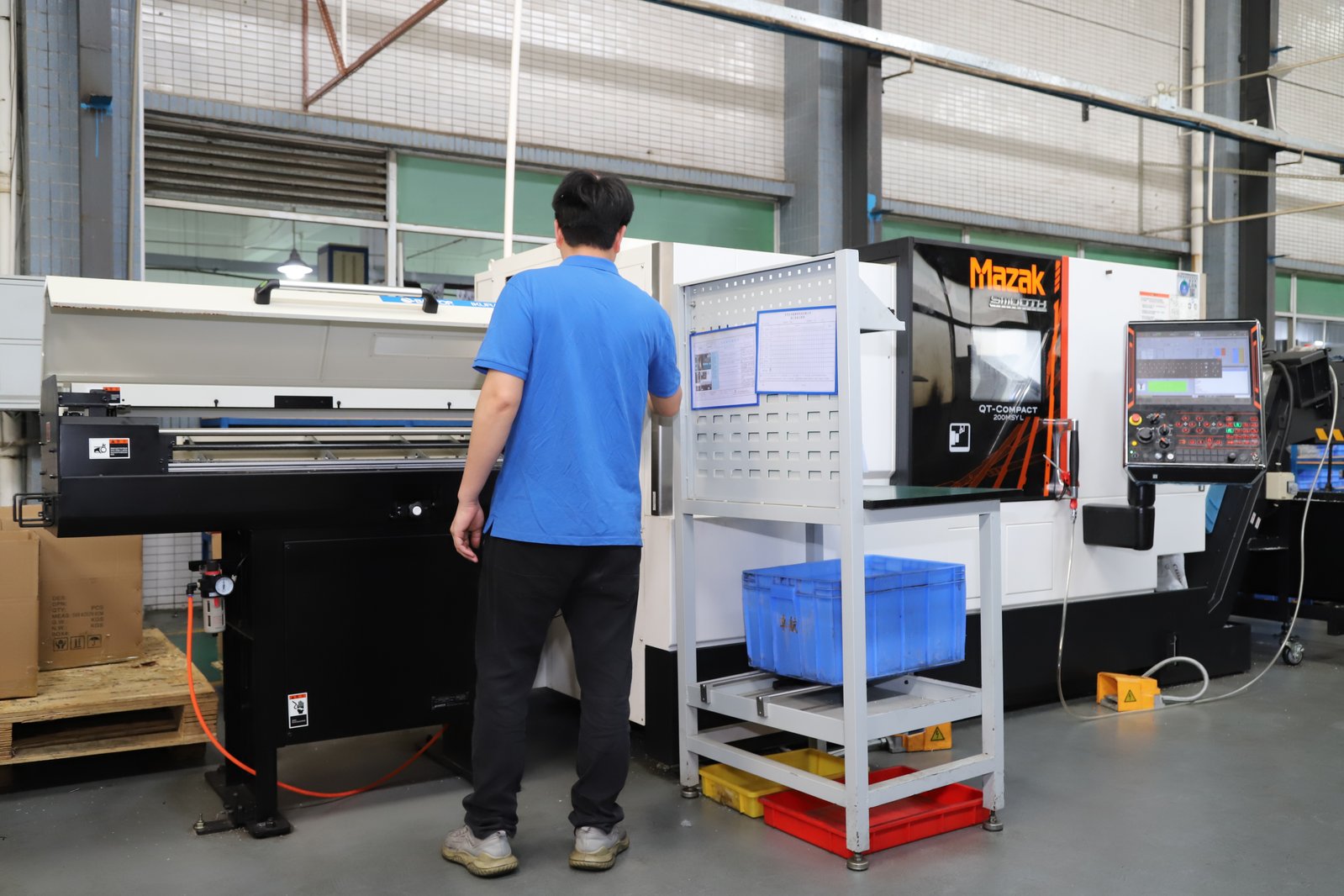
The cheapest part is not always the one with the lowest unit price; it is the one on the right process for its drawing, its volume, and its schedule. CNC machining in China wins the majority of precision work because it delivers tight tolerances from a drawing with no tooling, around ±0.003 mm on milled and turned features and ±0.002 mm on ground details, with capability such as Ppk ≥ 1.67 initial on the criticals. But the alternatives win real parts too: casting for high-volume shapes, forging for grain-aligned strength, additive for geometry no cutter can reach. The skill is not choosing a favourite process; it is knowing where each one wins, and switching cleanly when the evidence points away from the machine.
- Machining wins by default, loses on merit: the drawing and the volume decide where the machine keeps the part and where an alternative takes it.
- The envelope is the anchor: about ±0.003 mm milled and turned, ±0.002 mm ground, Ppk ≥ 1.67 initial on criticals.
- Switching is a schedule event: moving a part to casting or printing needs a first article and a new lead time, planned before the old lane closes.
- Price the same drawing: the comparison is only honest when every route quotes the same scope and the same documents.
- Keep the machine as the referee: whatever route wins, the criticals usually come back to the machine.
Why does machining in China win most parts by default?
Machining wins by default because it asks for nothing before it can start. A drawing, a material, and an order are enough to produce a first article in days, with no tooling to build, no pattern to cast, and no process development to fund. For a part that has never been made, that is an overwhelming advantage.
That advantage is easy to underestimate until a route change is attempted: casting asks for a pattern, forging for a die, printing for a build plan, and each of those is a supplier conversation, a cost, and a stretch of weeks before the first chip exists.
The default holds wherever tolerances decide the function. Sealing faces, press-fit diameters, bearing journals, and threaded hardware are machined features by definition, and the machine holds them with the least fuss and the best documented evidence.
Default is not destiny. The parts machining wins are the parts where its advantages matter; the parts it loses are the ones where volume or geometry outweigh them. Knowing which category a part falls into is the whole skill.
The skill is practical rather than theoretical: a part with two machined criticals and a run of a thousand is machined; the same part at a hundred thousand units with five criticals starts to argue for a near-net blank; and the arithmetic, not the brand of the process, makes the call.
Where does casting or forging take the part away from the machine?
Casting and forging take the part when the volume is high, the shape or the grain direction rewards the process, and the material saving is real. A housing run at tens of thousands of units repays its die quickly; a loaded component whose grain follows the forging direction carries strength the machine cannot supply from bar.
The takeover is never complete, because the criticals stay on the machine. The cast or forged part still visits the cutter for its bores, faces, and threads, so the route change is really a shift in where the metal starts, not a farewell to the machine shop.
The near-net supplier list therefore has to pass the machine’s quality standard, because the blank quality decides how much machining work the criticals need. A porous casting or a soft forging costs the machine floor more than the blank saved.
The decision to switch belongs to the drawing and the volume together. A high-volume part whose criticals are few is a strong casting candidate; a high-volume part covered in machined features is still a machining part wearing a bigger order.
The honest way to see the crossover is to ask for the route comparison at your current volume and at triple it. If the ranking holds, the part stays; if it flips, the part has a ceiling it will hit at a predictable volume.
Where does additive manufacturing genuinely beat the machine?
Additive beats the machine where the geometry makes machining impossible or absurd: internal cooling channels, conformal passages, lattices, and one-piece mechanisms that the cutter would have to split into assemblies and then join. For those parts, the alternative to printing is not machining but assembly.
Additive also wins at the very small end of volume, where the flexibility to change the design between parts is worth more than any cost curve. A geometry that is still being tuned is a geometry better printed than tooled.
The discipline of the comparison stays the same: price the printed part with its post-machining against the machined assembly with its joining. When the printed route wins the total, the machine usually still cuts the criticals and the datums it needs.
Machined datums are the quiet enabler of printed geometry: a printed channel proves its function fastest when it is located and inspected from machined references, which is why printed parts and machine floors keep appearing together.
What does the tolerance and surface map say about a part before any quote?
The tolerance and surface map of the drawing is the first document to read, because it decides how much of any route ends at the machine. Circle the features that carry a tight tolerance or a functional finish, and the number of circles is the number of machine visits the part will make whatever route it starts on.
The circles also set the inspection expectation, because each circled feature is a line in the first-article report. A drawing with few circles has a short report and a fast gate; a drawing with many has a long report and a slow one.
The map also explains the cost curve. A part whose criticals are one bore and one face can migrate to a near-net route and keep the machine visits short; a part whose criticals are everywhere is a machining part whose migration would save almost nothing.
Building the map before pricing is what keeps the route comparison honest. The shop that shows you the map and the route together is engineering the comparison; one that quotes a process without the map is selling a process.
The map also belongs on the quotation, so the price can be checked against the criticals. A quote for a machined part that lists the criticals and their measurement is a quote you can audit; one that lists only a total is a number you can only argue with.
How do you price the alternatives against each other honestly?
Honest pricing compares the same drawing, the same scope, and the same volume across the routes. Each route should quote the material, the primary process, the secondary machining, the finish, the inspection, and the freight, with the tooling carried as a line of its own.
The unit price is a fraction of the truth. The whole truth is the programme total: tooling amortized over the run, material yield, the machining that follows, the inspection plan, and the schedule from order to first article.
The inspection plan belongs in the programme total too, because a route whose acceptance method is standard costs less to prove than one whose method is still being invented, and the difference is real money across a long run.
Where the unit prices are close, the schedule and the risk decide. The route with the faster first article and the more standard inspection methods wins ties, because it carries less calendar risk and less document risk.
Where the programme is long, the document risk compounds: every lot of a route with non-standard inspection is a lot whose evidence has to be argued, while a standard route’s evidence is accepted on sight.
How do you switch a part to an alternative without losing the schedule?
Switching is a schedule event, not a sourcing remark. Moving a part from the machine to a casting or a printer adds tooling or build time, adds a new first article, and changes the freight pattern, and all of that has to be planned before the old lane closes.
The clean switch runs in parallel: keep the machining lane open while the new route proves itself, then close the old lane once the new first article passes and the volume justifies it. Parallel running costs a little overlap and removes almost all the risk.
The overlap has a natural end: once the new route has shipped two or three lots that match the machined reference, the old lane can close with confidence, and the inventory it held becomes the bridge to the new lane.
Keep the inventory of the old lane small once the new lane is proving itself, so the overlap does not become a warehouse. The parallel run is a bridge, and bridges are meant to be crossed, not lived on.
The machined part stays the reference through the switch. When the cast or printed version arrives, the comparison against the machined sample is the proof that the new route holds the drawing.
What role does the supplier play in the route choice?
A good machining supplier in China is honest about when its route loses, because the relationship outlives any single part. Asking which of your parts would be cheaper cast, forged, or printed is the question that separates a partner from a sales desk.
The same supplier can often coordinate the alternative: buy the near-net blank or the printed geometry, machine the criticals, and deliver a finished part under one drawing and one quality standard. That keeps the route switch invisible to the buyer’s own process.
The single-supplier route switch also keeps the drawing ownership clean: one shop, one revision control, one first-article file, and the buyer does not have to reconcile three suppliers’ interpretations of the same drawing.
When the volume finally justifies owning the tooling yourself, the single-supplier model is still the safe route: the die stays with the shop that runs the criticals, and the buyer owns a drawing and a reference rather than a supplier hostage.
The coordination works because the machine floor is the common denominator of every route. Whatever process wins the shape, the criticals return to the machine, and the supplier that owns the machine owns the quality gate.
How do you keep the route decision current across the life of a part?
A route decision is a point-in-time judgement that goes stale. Volumes grow, drawings tighten, alloys change, and freight rates move, and any one of those can flip a part from machining to casting or back again.
The review should be calendared rather than remembered, because nobody schedules a route review when the parts are arriving on time. A date in the plan is the only guarantee the comparison stays current. When a review does flip a part, the flip should be a controlled event - a new first article, a new reference, and a plan for the inventory of the old route - because a route change that is planned is a decision, and one that happens in response to a crisis is an accident wearing a justification. Decide the flip before the volume forces it.
- Review the route at the volume milestones. When a part crosses from hundreds to thousands or tens of thousands, re-run the comparison.
- Review after every drawing change. A revision that adds machined features strengthens the machining case; one that simplifies geometry weakens it.
- Re-price on the same scope each time. The comparison is only comparable when nothing else changes between reviews.
- Watch the freight line. A rate change can flip an offshore route decision faster than any other line.
- Keep the machined reference. The prototype from the machining lane is the benchmark every new route must beat.
A route decision that is reviewed at the volume milestones and after every drawing change is a decision that tracks the part. Machining in China will keep most of the portfolio, and the alternatives will earn the parts they genuinely fit, with the drawing as the referee and the schedule as the calendar.
Frequently Asked Questions
Why does machining in China win most precision parts?
Because it delivers the tight envelope - about ±0.003 mm milled and turned, ±0.002 mm ground - from a drawing with no tooling and a fast first article. Casting, forging, and additive take the parts where volume or geometry outweighs that advantage.
When should a part leave the machine for a casting?
At high volume with a shape or grain direction the process rewards and few enough machined criticals that the near-net saving survives. The tooling has to amortize over the run for the switch to make sense.
When does printing beat the machine?
When the geometry is impossible to cut - internal channels, lattices, one-piece mechanisms - and the volume is small. The comparison is against the machined assembly, not against machining alone.
What decides how much a route change saves?
The tolerance and surface map of the drawing. Each machined critical is a machine visit whatever route the part starts on, so the count of criticals decides how much of the near-net saving survives.
How should the routes be priced against each other?
On the same drawing, the same scope, and the same volume, with the tooling, the machining that follows, the finish, the inspection, and the freight all as lines. The programme total, not the unit price, decides.
How do I switch a part without losing the schedule?
Run the lanes in parallel: keep machining while the new route builds tooling and proves its first article, then close the old lane once the new first article passes. The machined part stays the reference through the switch.
How often should a route decision be reviewed?
At the volume milestones and after every drawing change, and whenever freight or material prices move materially. A route decision is only as current as its inputs.
Want to know which of your parts should leave the machine?
Send the drawing set with volumes and ask for a route review that prices machining against the alternatives on the same scope. Contact the CNC Machining China team to run the comparison.