
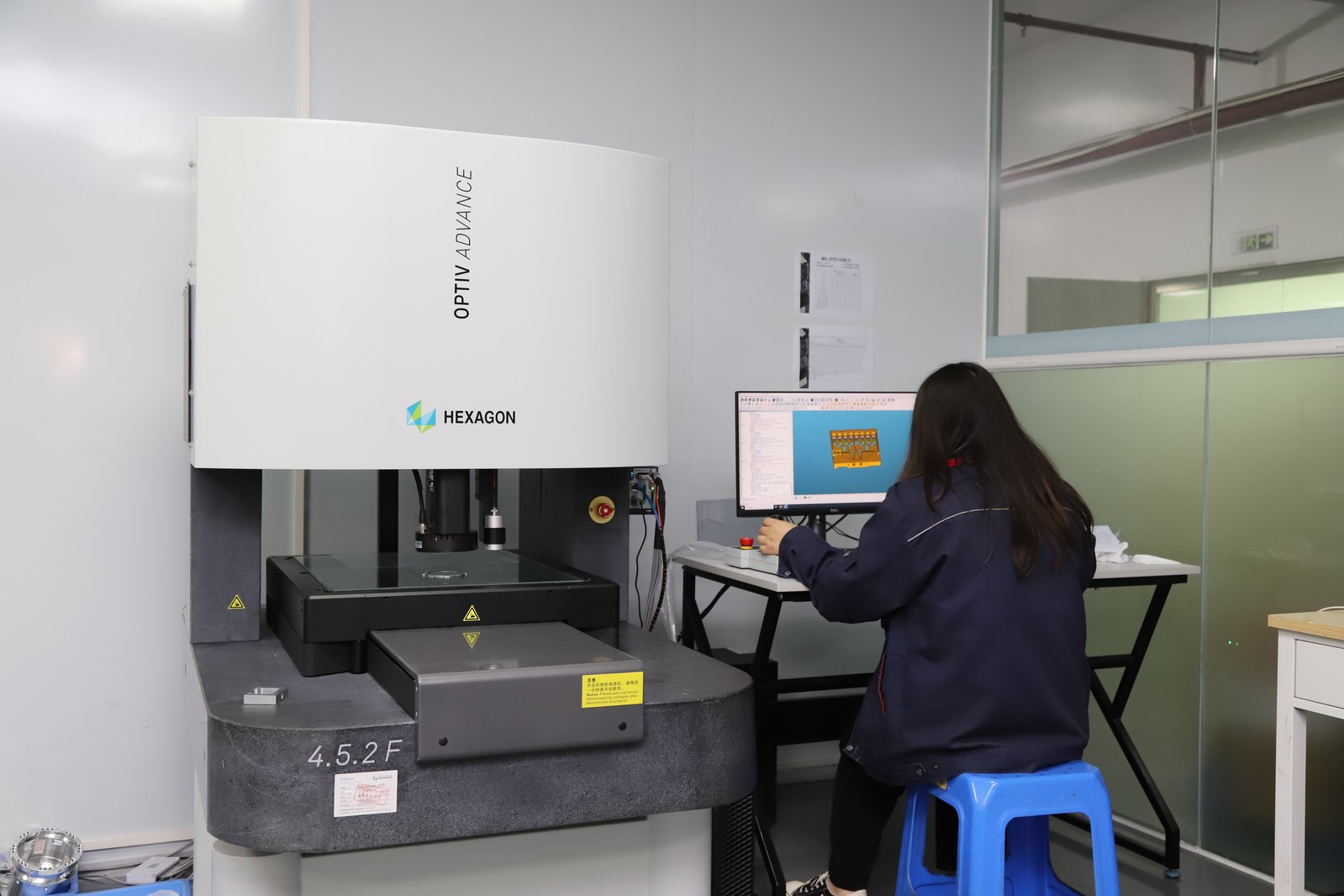
Buying CNC machined parts from China is usually cheaper per unit and more complex in total than a domestic order, which is why the number that matters is total cost, not unit price. The unit price is built from the familiar levers - material, machining time, tolerance, quantity, and finishing - and the total adds freight, lead-time risk, documentation, and the cost of a bad lot arriving at your dock. This guide walks both halves of the model and shows how to structure a drawing and an RFQ so the number you approve is the number you understand.
- Model TCO, not unit price: freight, lead time, quality risk, and rework belong in the comparison.
- Largest cost levers: material grade, cycle time, tolerance count, quantity, and finishing.
- Tolerance: ±0.003 mm on milled and turned features; tighten only what functions.
- Quantity: setup dominates at one piece and amortizes as the run grows.
- Scope first: align material, finish, and inspection across quotes before comparing prices.
Why should a China machining buyer model total cost instead of unit price?
China pricing wins on the unit price and complicates everything around it. Freight, customs, lead time, currency, and the cost of returning a bad lot all belong in the comparison, and they can erase a unit-price advantage when the parts are small, urgent, or critical. Buyers who compare only unit prices are comparing one half of the number.
Currency and payment belong in the model too. Foreign-exchange movement, transfer fees, and the working capital tied up for the longer lead time are real costs, and they show up on a different line than the unit price. Add them once and the total stays honest.
A simple total-cost model adds the per-unit equivalent of freight and duty, the inventory carrying cost of the longer lead time, and a quality-risk allowance on the first lots. When the total lands below the alternative, China sourcing is genuinely cheaper; when it does not, the unit price was a discount on a different product.
The model gets sharper with history. After the first few lots you know the real freight cost, the real lead-time variability, and the real rejection rate of a given supplier, and those numbers replace the estimates. Total-cost modeling is a habit, not a spreadsheet exercise.
Build the model once per part family rather than per order. Once the material, geometry, and finishing are known for a bracket type, the total cost of any similar part follows from a few inputs, and the comparison with local supply becomes a standing number rather than a fresh estimate each time.
Review the model at every reorder. Freight rates, alloy surcharges, and exchange rates move, and a total-cost number that was right in January can be wrong by June. Re-baselining twice a year keeps the China decision honest rather than habitual, and the model does the negotiating for you.
What actually sets the unit price of a machined part in China?
The unit price is a stack of costs: material, programming and setup, machining time, finishing, inspection, and the shop overhead. On a one-off part the setup dominates; on a production run the per-piece machining time takes over; on a small precision part the inspection can rival the cutting. Knowing which layer is largest tells you where the honest savings live.
Machining time is the core of the variable cost and geometry sets it: the number of tools, passes, and operations each add minutes that accumulate across a run. Material sets the speed those minutes run at and the wear they cost. Tolerance and inspection add the measurement layer on top.
A supplier that shows the stack as separate lines is quoting from your part; one that returns only a total is quoting from a template. Always ask for the split before comparing prices.
The overhead layer is real and rarely visible: engineering review, quoting, quality management, and the instruments behind the inspection reports. A shop running a certified system - ISO 9001:2015, IATF 16949:2016 (product design excluded) and ISO 14001:2015 certified is the level to look for - prices that system into its parts, and it is usually the layer that separates a reproducible part from a lucky one.
How much does material choice move the price?
Material decides cutting speed, tool wear, and stock price together. Aluminum machines fast and is gentle on tools; steel and stainless cut slower; titanium and the nickel alloys cut slowest and carry the highest machining premium. The grade inside a family matters too - 6061 against 7075, 303 against 316L - and the drawing note should name it precisely.
| Material | Machinability | Cost position | Buyer note |
|---|---|---|---|
| Aluminum 6061-T6 | Excellent | Lowest | Fast cycles, fine surface, easy tooling; anodizes cleanly. |
| Aluminum 7075-T6 | Good | Low to mid | Stronger and more abrasive; premium over 6061. |
| Brass and copper | Excellent | Mid | Free-cutting; good for electrical and fluid parts. |
| Carbon steel | Good | Mid | Predictable; heat treatment can follow machining. |
| Stainless 303 / 304 / 316L | Fair to good | Mid to high | Work-hardens; grade choice drives price and properties. |
| Titanium Ti-6Al-4V | Poor to fair | High | Slow cycles and hard tooling; premium over steel. |
| Inconel 718 | Poor | Highest | Reserve for temperature and corrosion nothing else meets. |
Match the grade to the environment and let the certificate prove it. A mill certificate with a heat number costs little, but naming it in the RFQ means the quote prices the alloy you actually receive rather than the one you hoped for.
Threads deserve separate attention as a cost feature. Cutting a thread adds operations and an inspection characteristic, and a thread that seals or carries load costs more than a clearance hole. Consolidate thread sizes across the design to cut tool changes and cycle time together.
What does tolerance add to a China machining price?
Tolerance raises cost through cutting strategy and inspection. Milled and turned features hold ±0.003 mm in a controlled process, and precision-ground surfaces reach ±0.002 mm; the price moves with how many features demand the tight end of that envelope and how they are measured. A drawing with three critical dimensions costs less than one where everything is tight.
Every tight callout plans for it: slower finishing passes, dedicated tooling, and CMM verification against the drawing datums. The expense is the care and the evidence, and features that never function at that level are paying for both. Mark the key characteristics on the drawing so the shop spends its measurement budget where the part needs it.
Capability data is the proof behind the tolerance. A supplier that quotes Ppk ≥ 1.67 at the initial study on key characteristics and Cpk ≥ 1.33 on general characteristics. Capability is reported per characteristic: every report names the feature, its tolerance band, the sample size, the sigma method, and the study window has measured its process; one that cannot will still assure you everything is fine. Buy from the shop that measures - the reports are part of what you are paying for.
Inspection on a precision part deserves its own budget line. A functional drawing needs the dimensions it depends on verified - the press-fit diameter, the mating interface - while cosmetic features do not need CMM proof on every lot. Tell the supplier which characteristics to measure, and the report and the price both stay proportional.
How does quantity change the unit price - and the total?
Setup, programming, and first-article proving are fixed costs that do not change with quantity. On a single piece they dominate the unit price; at higher quantities they amortize toward nothing. The process is identical; only the amortization changes, which is why quantity breakpoints matter on every RFQ.
For China sourcing, quantity interacts with freight. A larger order fills a box more efficiently and reduces the per-unit freight, while small urgent orders pay express rates that can dominate the total. Model the freight at your real quantity before comparing unit prices across suppliers.
Model the freight at your real quantity before comparing unit prices across suppliers. Freight consolidation across several part numbers is the China buyer’s version of setup amortization, and it belongs in the same model.Watch for quantity discounts that shift scope. A lower unit price is real only when the material, tolerance, finishing, and inspection stay identical. Compare the total at the quantity you need, and confirm the volume quote describes the same process as the prototype.
Tooling behaves differently from setup. Standard tooling is usually inside the rate; special form tools, broaches, and dedicated fixtures appear as one-time charges. Ask which your drawing triggers, because a one-time fixture at low volume can dominate the order, and a small design change can remove the need for it.
Run-size breaks belong on the RFQ as well. A part that jumps from a one-off to a thousand pieces changes both the unit price and the freight per part, and asking for breakpoints at fifty, five hundred, and five thousand tells you where the curve flattens before you commit.
Where do finishing and secondary operations sit in the price?
Finishing can outweigh machining on a small part. Anodizing, plating, passivation, powder coating, and heat treatment each add an operation - usually at a separate vendor - and each adds cost and days. A finish requested for appearance on a part that only needs function is money spent twice.
Quality extras such as material certificates, CMM reports, and PPAP-style documentation belong in the secondary column too. None are unreasonable; they are line items, and they should sit on the quotation rather than being folded silently into the piece price.
Ask where measurement happens in the finishing sequence. A tolerance that must survive anodizing applies to the coated part, not the bare one, and the drawing should say which. Finish notes that are explicit prevent the disputes that turn a cheap part into an expensive one.
Packaging and export close the price picture. Protective wrapping, boxes, moisture barriers, and export paperwork carry cost, and the incoterm decides where freight and risk begin. Fix the incoterm in the RFQ so every quote is compared on the same delivery basis.
Why do two China quotes for the same part differ - and which do you trust?
Quotes differ because the assumptions differ. One supplier assumes a standard finish you assumed absent; another includes a CMM report you did not request; a third quotes a different material condition or a different machine route. The spread in numbers is usually the spread in scope rather than the spread in competence.
Align scope before price: material and grade, finish and its timing, inspection documents, quantity, and the incoterm. When the scope matches, the remaining difference is real and the lower number deserves the order. When it does not, the higher number may be the better buy.
Inspect the cheapest quote hardest. Ask what the low price excludes - finishing, certificates, or inspection reports are the usual answers. A low number with named exclusions is honest; a low number with silence is a change order waiting to happen.
The fastest scope check is to ask every supplier the same design question: name the three features that drive the most cost on this drawing. The answers reveal who studied the part and who priced the thumbnail, and they align the conversation before the prices arrive.
How do you structure a drawing and an RFQ to buy at the right total cost?
- Name the material, grade, and condition. The note should say 6061-T6 or 316L, not aluminum or stainless.
- Mark the key characteristics. Flag the few features that must hold ±0.003 mm or tighter and leave the rest to a general tolerance.
- State the finish and its timing. Say whether Ra applies as machined or after anodizing or plating.
- Fix the quantity, the incoterm, and the target date. Freight and lead time are part of the total cost, not an afterthought.
- Ask for an itemized quote. Material, machining, finishing, and inspection as separate lines, with the method named.
The right price is the total cost at your real quantity and your real delivery basis, not the lowest unit number on a screen. When the scope is identical across quotes, competition does the rest - and the shop that explains its price and its freight usually understands your order best.
Update the quote when the drawing changes. A revision that adds a feature or tightens a callout invalidates the old price, so ask for a re-quote before production rather than absorbing the delta later. Confirm the quoted revision in writing and treat unquoted changes as new line items - revision control is the cheapest cost lever you own.
Frequently Asked Questions
How much does CNC machining in China cost?
Too many variables exist for a meaningful single figure - material, size, tolerance, quantity, finishing, and freight all move it. Model total cost, not unit price: freight, lead time, and quality risk belong in the comparison.
Is China machining always cheaper?
Often on unit price, and sometimes on total cost once freight and lead time are included. The comparison depends on your quantity, your freight mode, and the quality risk you are willing to carry on early lots.
Does a tighter tolerance always mean a more expensive part?
Yes, but the increase comes from the care and the measurement, not from the number. Tighten the features that function, release the rest, and the extra cost stays where the drawing needs it.
How much does ocean freight add to the total cost?
Container shipping adds weeks and a per-unit freight cost that falls as the box fills; air freight is faster and priced accordingly. Model the freight at your real quantity and incoterm before comparing unit prices.
Why did my two China quotes differ so much?
Usually because the scope differs: finishing, inspection, material condition, or the incoterm. Align the assumptions and the spread narrows. A low quote with named exclusions is honest; a low quote with silence is a change order.
Should inspection reports be included in the price?
Yes, for the features that matter. A certificate of conformance and a CMM report for the ±0.003 mm characteristics belong in the quotation. Ask what is included before you compare prices.
What is the fastest way to lower the total cost?
Act on the design-for-manufacturing review, batch your revisions, and consolidate parts into fewer shipments. Each removes a fixed cost that shows up in the total even when the unit price looks fine.
Want a total-cost view of your drawing?
Send the part file with your quantity, finish, and delivery basis and ask for an itemized quotation with freight options. Contact the CNC Machining China team to model the number.