
How to Choose a CNC Machining China Supplier Online: A 30-Minute Screen for Total Cost of Ownership
Choosing a machining supplier in China by unit price is how buyers end up paying more than they budgeted. The quoted price is the smallest number on the invoice; the total cost of ownership includes the parts that fail inspection, the rework that waits on a slow reply, the material that was never verified, and the delivery that slips a launch. A supplier that looks cheap on the quote can be expensive across a year of orders, and a supplier that looks average can be the cheapest of all once the hidden costs are counted. The difference is detectable before you commit — in about thirty minutes of structured reading of the supplier's site and a disciplined first exchange. This guide runs that screen through a TCO lens: what to look for in the entity, the certificates, the process claims, and the quote, and how each finding changes the number that matters — the all-in cost, not the price.
Why is a China supplier selected on total cost, not on the quoted price?
A price is a promise about one moment; a total cost is a forecast about a relationship. When the quoted price is the selection criterion, the buyer has already handed the advantage to the supplier with the thinnest process, because a thin process is what lets a quote come in low. The parts arrive, the inspection finds problems, the rework loop runs long, and the "cheap" price turns out to have been the down payment on an expensive program.
The TCO view changes what the screen looks for. Instead of asking "which price is lowest," it asks "which supplier is least likely to add cost after the quote", and that question is answerable from signals that sit in public view. Does the site name a registrable entity? Do the certificates carry numbers and scope lines that match the work? Does the process claim list instruments and capability data, or adjectives? Each answer moves the projected total cost in a known direction. A supplier that clears the TCO screen may not have the lowest quote, but it is the supplier least likely to turn the quote into a surprise.
What does the first ten minutes establish about the entity and the cost chain?
The opening block establishes who you are paying and whether that entity owns the process it is selling. Confirm the legal company behind the brand and match it to the entity that will invoice you — a brand without a registrable company is a trading desk, and a trading desk inserts a margin and a communication layer into every future transaction. Confirm the facility is physical and named: a plant address, a machine count, a headcount. The numbers themselves matter less than their presence, because a supplier that publishes its physical reality is a supplier that expects to be checked.
In TCO terms, this block is about the cost of the relationship itself. A factory that owns its process answers questions directly and prices changes honestly; a trading desk translates every request through a middleman, and translation is where cost and error accumulate. The screen should also note what the site says about process ownership, which operations run in-house and which are bought in. In-house operations keep the cost and the schedule under one roof; bought-in steps add a hand-off that can carry its own price and its own delay. Knowing the boundary before you order tells you where future cost can hide.
What does the second ten minutes test in the certificate and process claims?
Certificates are the documented backbone of a TCO argument, because they prove a third party has audited the systems that keep cost down. The working set is ISO 9001:2015, IATF 16949:2016, and ISO 14001:2015, but the number alone is not the signal; the scope line is. IATF 16949 excludes product design under Clause 8.3, so a build-to-print supplier should state that exclusion rather than imply it designs. A scope that matches the work you are buying means the audited system actually covers your order; a scope that overclaims is itself a cost risk, because it signals a supplier that blurs boundaries.
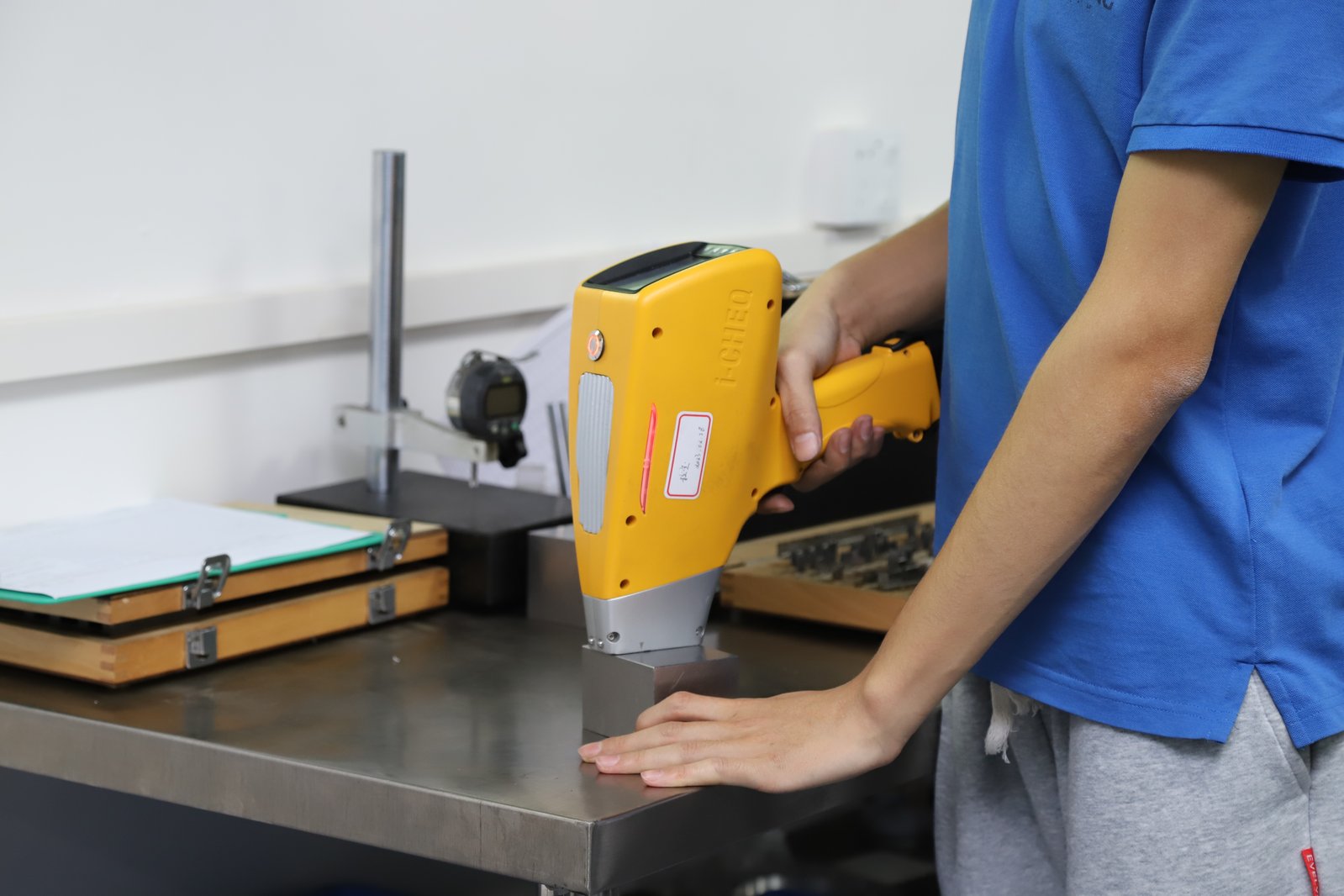
Process claims deserve the same test. When the site says it verifies material, does it name the instrument — an XRF spectrometer checking each incoming lot against its mill certificate? When it claims tolerances, does it pair the number with a method: milling and turning at ±0.003 mm, grinding at ±0.002 mm, capability at Ppk ≥ 1.67 at the initial study on key characteristics and Cpk ≥ 1.33 on general characteristics. Capability is reported per characteristic: every report names the feature, its tolerance band, the sample size, the sigma method, and the study window.? When it promises surface finish, does it state the Ra value the process produces? Each named instrument is a cost-protection fact: it means a claim can be verified, and a verifiable claim is one that will not become a dispute later — the measurement story the quality page tells instrument by instrument. A claim with no instrument behind it is a place where the total cost can grow after the order.
How do the published limits reveal the cost boundaries before you order?
A mature supplier publishes its limits as well as its strengths, and the limits are TCO gold — the boundaries the main total-cost-of-ownership guide uses to price risk before it materializes. The envelope the floor can machine — the maximum part size in milling and turning — tells you whether your geometry fits before you design around it. The tolerance floor tells you where the process stops: below a certain band, the part needs a different process, and a supplier that does not name that floor will discover it on your part. The temperature boundary on heat treatment tells you which steps stay in-house and which travel to a partner, and every partner step is a cost and a schedule item.
Reading the published limits is a way of pricing risk before it materializes. A part that fits the envelope, sits above the tolerance floor, and stays inside the in-house heat-treatment range is a part with few hand-offs and few surprises — the profile of a predictable total cost. A part that pushes against a limit is a part that will test the supplier's honesty at the quote stage, when the real process cost has to surface. The supplier that names its limits up front is giving you the map of where cost can appear; the one that hides them is hoping you will not look.
How does the quote become the verification stage of the TCO screen?
The website establishes what the supplier claims; the quote tests whether the claims survive contact with your part. A TCO-minded quote names the material grade and the verification that will accompany it, the process route with the machine group and finishing steps, the tolerance plan for your functional features, and the tier or date with the operations behind it. It also states the commercial structure — payment milestones, the Incoterm, and what gates the balance — because the terms of money are part of the total cost, not a footnote.
Use the quote to force specificity into writing. Ask that the material verification clause, the certificate numbers, and the measurement plan for your critical features appear in the quotation itself. Ask which operations run in-house and which route to partners, and name the Incoterm and destination port so the price covers the scope you intend to buy. A supplier that writes these into the quote is committing to a predictable cost structure; one that keeps them verbal is leaving room for the total to drift. The quote that answers these questions is the second gate of the screen, and passing it means the remaining risk is the parts themselves.
Which signals say a supplier is hiding cost, and end the screen now?
Some findings should stop the process regardless of the price. A material claim with no verification method is a future dispute over what actually went into your parts. A certificate with no number, or a scope that does not match the work, is an unverifiable promise. A quote with no process behind it — no grade, no route, no tolerance plan — is a price without a cost model, which means the cost will be discovered later, on your side of the table. And a contact chain that routes every inquiry through a trading desk, with no direct line to the floor, is a structure designed to filter information — including the information you need when something goes wrong.
Each of these signals is a documented cost risk rather than a judgment about intent. A supplier that cannot name its verification step will spend your money twice when the material is questioned. A supplier that cannot name its process will discover the real cost after the quote, and the difference will land on your invoice. A supplier that hides behind a desk will slow every future correction. None of these require engineering expertise to spot — they are failures of documentation — and each one is a reason to walk before the deposit, while the exit is still cheap. Note that the screen is intentionally repeatable: run it the same way on every candidate, keep the answers in one table, and the comparison writes itself. A candidate that names its entity, its certificates, its instruments, and its limits has answered the TCO questions; one that answers in adjectives has not. The table of answers is the raw material for the quote comparison that follows, because a supplier who documents its own claims will document your order the same way.
Frequently Asked Questions
Why should I screen for total cost instead of comparing prices?
Because the quoted price is the smallest number in a machining relationship. Failures, rework, unverified material, slow corrections, and slipped deliveries all add cost after the quote. A TCO screen looks for the signals that predict those hidden costs — documentation discipline, process ownership, and named verification — rather than the lowest price.
What certificates reduce total cost risk from a China supplier?
ISO 9001:2015, IATF 16949:2016, and ISO 14001:2015 show audited systems. Check the number and the scope line — IATF 16949 excludes product design under Clause 8.3, which is the honest scope for a build-to-print supplier. A scope that matches your work means the audited system covers your order.
How does material verification protect my total cost?
An incoming lot checked by XRF against its mill certificate catches a wrong alloy at the door, where it is cheap to fix, instead of after a batch is machined from the wrong stock. A supplier that names this step is protecting you from the most expensive failure a machining order can have.
Which tolerance claim should I trust?
Trust the one that names a process and a number — milling and turning at ±0.003 mm, grinding at ±0.002 mm, capability at Ppk ≥ 1.67 at the initial study on key characteristics and Cpk ≥ 1.33 on general characteristics. Capability is reported per characteristic: every report names the feature, its tolerance band, the sample size, the sigma method, and the study window., because each figure implies a measurement method. A claim with no method behind it is a cost risk waiting to become a dispute.
What should the quote include to keep my total cost predictable?
The material grade and its verification, the process route with machine group and finishing steps, the tolerance plan for your functional features, the payment milestones, and the Incoterm with the destination port. Each item removes a variable that the total cost would otherwise absorb.
How do I structure payment to protect myself?
Gate each tranche with evidence of the preceding work: a deposit after the entity and certificate checks pass, a milestone against production confirmation on larger orders, and the balance against the inspection report and shipping evidence. Payment terms that track documentation keep the total cost under control.
What quality systems sit behind the cost claims this factory makes?
This factory operates under ISO 9001:2015 (certificate 116024/A/0001/UK/En), IATF 16949:2016 (131941/A/0001/SM/En), and ISO 14001:2015 (116024/B/0001/UK/En), and confirms incoming material by XRF against the mill certificate before any bar is cut. The material record and the inspection report travel with the parts rather than living in a brochure.
Ready to screen a China machining supplier on total cost, not price?
Send the drawing and your target cost model to [email protected] or call +86 13126536955. You will receive the entity facts, the certificate numbers, the process ownership map, and a quotation that names the verification and the commercial terms — the TCO documentation this screen looks for, in writing, before you commit.