
4-Axis CNC Machining in China: The Total Cost of Choosing the Right Axis, or the Wrong One
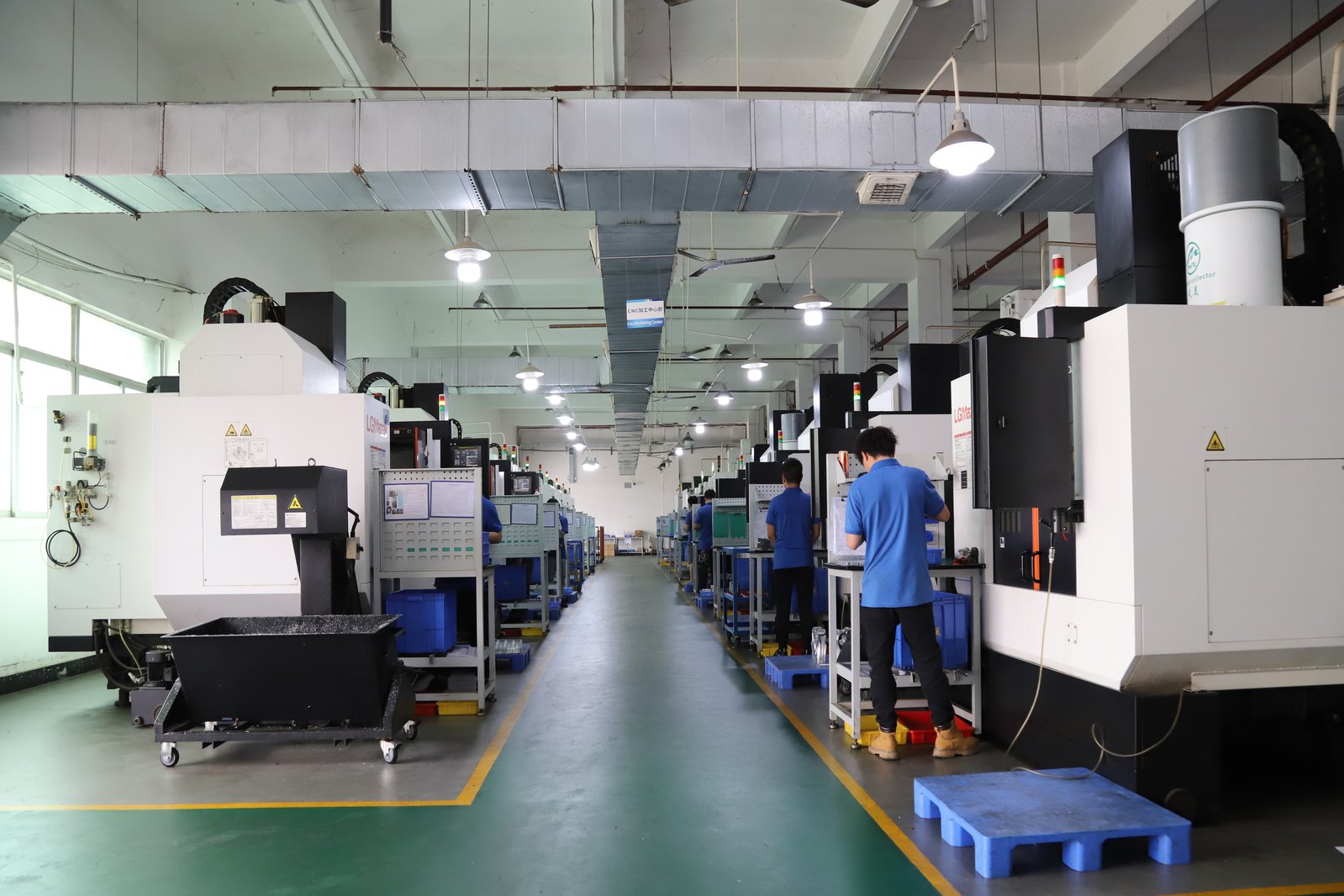
The axis decision looks like an engineering choice — does the part need a fourth axis or not — but its real content is economic. Choosing 3-axis machining for a part whose cross-face relationships demand a rotary setup does not save the axis cost; it converts that cost into a different form: rejected parts, assembly failures, rework, and the engineering hours spent explaining why features that should relate do not. Choosing 5-axis where 4-axis suffices converts money into unused capacity. The axis decision is a total-cost decision, and the total includes the probability-weighted cost of getting it wrong. This guide applies the TCO frame to axis selection: why the axis choice is an economic decision, what under-powering a part actually costs in expectation, where axis-related cost hides in the quote and the run, how to price capability verification into the model, and how to compare the axis routing options — 3-axis with fixtures, 4-axis, or 5-axis — by their total cost rather than by their rates.
Why is the axis decision a total-cost decision, not a per-part one?
The axis choice determines where the part's cross-face relationships are produced, and that single fact decides which failure modes the order will face. The comparison that matters is therefore not the machine-hour rate difference between a 3-axis and a 4-axis quote — it is the difference in expected cost across the whole run:
- The wrong axis converts capability cost into failure cost. A part whose critical features sit on different faces can be made on a 3-axis machine with fixtures and re-clamps, and every re-clamp is an opportunity for the relationship between faces to drift. The result is not that the part cannot be made; it is that the parts fail at a rate the quote never priced, and the failures are discovered at inspection or, worse, at assembly.
- The failure cost is a probability, not a certainty, which is why it is invisible. Under-powered axis work does not fail every part; it fails some fraction, and the fraction depends on the tolerance, the fixture quality, and the operator's skill. Because the failure is probabilistic, it never appears on the quote, but it is real, estimable from history, and it belongs in the model as an expected cost per part.
- The axis premium buys a different cost structure, not just a capability. A 4-axis setup costs more per hour than a 3-axis one, but it eliminates the setups whose drift drives the failure rate — trading a visible hourly premium for an invisible failure-cost reduction. Whether the trade is favorable is a question the TCO model answers with numbers rather than with opinions about capability.
The buyer-side frame: when the drawing has cross-face relationships, the axis choice is not "can it be made on 3-axis?" (almost anything can, with enough fixtures) but "what will making it on 3-axis cost in expected failures versus the 4-axis premium?", and that is a question only a total-cost view can answer.
What does under-powering a part actually cost in expectation?
The honest way to evaluate a 3-axis-with-fixtures route for a cross-face part is to price its expected failure cost, which runs through three mechanisms:
- Setups are the error source, and each one adds probability. Every time the part is released and re-clamped, the datum relationship shifts by some amount, and the shift is larger than the machine's own precision. A feature that must clock to a feature machined in a previous setup carries the combined error of both setups, and the tighter the cross-face tolerance, the larger the fraction of parts that fall outside it.
- The failure shows up at inspection or assembly, whichever is later and more expensive. If the drift is caught at first-article inspection, the cost is a program and fixture fix before the run. If it is caught in batch inspection, the cost is the batch's rework or scrap. If it slips through to assembly, the cost is a failed assembly — the most expensive place to discover a relationship error, because the parts have already accumulated value.
- The expected cost is the failure probability times the loss, per part, across the run. A 5 percent rejection rate on a cross-face tolerance, with a rework or scrap cost per rejected part, is a number, and on a long run it is a large number. The model multiplies the probability by the loss and compares the result with the 4-axis premium, which is how the axis decision stops being a debate about capability and becomes a calculation about money.
The modeling habit: never assume the under-powered route fails at zero. Assign it the failure probability its setup count and tolerance imply, price the loss at the point of discovery, and let the arithmetic decide — the axis premium often looks small next to a rejection-rate difference that the quote never showed.
The same arithmetic runs in the opposite direction for over-specified work: choosing a 5-axis route for a part a 4-axis machine can make carries its own expected cost — a premium paid for capacity the geometry never uses, run after run. An honest axis model prices all three routes rather than defending one, which is why the comparison below treats 3-axis-with-fixtures, 4-axis, and 5-axis as three candidates for the same part.
Where does axis-related cost hide in the quote and the run?
Axis work carries cost lines that standard quotes bury, and a TCO model for axis parts needs to surface them:
- Programming and setup are the real cost centers. A 4-axis job's program, fixture, and first-article setup can rival the machining cost on short runs, and the quote structure determines whether revisions and re-runs carry those costs visibly or hide them in the per-part margin. The quote that itemizes programming and setup is comparable; the one that absorbs them is a guess wearing a price.
- First-article iteration is an expected cost, not an exception. Axis programs often need iteration at the first article — a rotation origin corrected, a fixture detail adjusted — and each iteration costs setup time. A supplier whose axis experience is real has fewer iterations; one learning the geometry has more, and the expected iteration cost belongs in the model.
- Cross-face inspection costs more than face inspection. Measuring the relationships the axis exists to produce — on a CMM, against the datum scheme — is slower and more instrument-intensive than checking flat-face sizes. The inspection depth the part needs is a cost line that differs between a supplier with an in-house CMM and one without, and the difference shows in delivered cost per good part.
- Rotary-table time is slower than fixed work. A 4-axis cycle runs slower than an equivalent 3-axis cut, and the slower rate is the price of the relationships, but it is a bounded, visible cost, unlike the unbounded, invisible failure cost of under-powering. The model's job is to show that trade clearly rather than to hide either side.
The buyer-side discipline: on axis work, read the quote for the lines that reveal the process — programming, setup, inspection, first-article handling — because those lines predict the delivered cost per good part better than the hourly rate does. A quote that shows them is a process with a price; one that hides them is a price with a process to be discovered.
How do you price capability verification into the axis TCO?
Verifying that the axis capability is real — before the run commits to it — is the axis model's insurance line, and it follows the same logic as material verification on expensive metals:
- The verification cost is small and bounded. A test piece that exercises the cross-face relationships, or a first article measured on the relationships rather than just the sizes, costs a defined amount of setup and inspection time. On axis work the verification event is cheap relative to the run it protects.
- The failure it prevents is the unbounded line. An axis capability that is not what the quote claimed — continuous promised as indexed, a rotary table whose positioning cannot hold the tolerance — fails across the run, not on one part. The expected loss of a capability gap discovered mid-run is large enough that the verification cost looks like the best bargain in the model.
- The verification evidence sets the failure-probability input. A supplier whose test piece or first-article evidence shows the cross-face relationships holding at the required tolerance justifies a low expected-failure input; one that has never demonstrated the capability on similar geometry gets a conservative assumption. The model converts verification evidence into a number, which is the only form in which it can be compared.
The rule: on axis work, the cheapest test of the capability is a single-part order or a designed test piece measured on the relationships, and the cost of that test, weighted against the expected loss of an unverified capability, is the model's clearest insurance purchase.
What does a rejected axis batch actually cost?
When an axis batch fails — the cross-face relationships drift out of tolerance across the run, or the capability gap surfaces in the delivered parts — the loss is a stack, and each layer is real:
- The parts themselves, with the axis work invested. A rejected batch carries the material plus the program, setup, and machining invested in it, and the axis work invested is the expensive part, because axis cycles are slow and setup-heavy.
- The re-run, with its full cost. A re-run repeats the program, setup, and inspection, and if the failure was a capability gap, the re-run must move to a different machine class, which carries a new setup and a new price. The re-run cost belongs in the model as the batch-failure loss, not as an unexpected event.
- The schedule cost, amplified by the axis context. A failed axis batch delays the parts that were already the critical path, and if the re-run needs a different machine class, the delay includes finding capacity on the right machine. The schedule loss is the third layer of the stack.
- The probability input differs by supplier and by verification. The expected batch-failure cost is the stack above, weighted by the batch's failure probability, which is lower for a supplier with demonstrated axis capability and first-article evidence, and higher for one whose capability is unproven. The model prices the difference, which is the point of running it.
The buyer-side habit: treat an axis batch failure as an expected event with a computable cost — the parts, the re-run, and the schedule — weighted by the probability that the capability and the process deliver what the quote promised. That is the difference between managing axis risk and discovering it in a rejected batch.
How do you compare axis routing options — 3-axis with fixtures, 4-axis, or 5-axis — on total cost?
The final axis TCO comparison is between routing options, not just suppliers, and it runs on one model with each option scored symmetrically:
- 3-axis with fixtures — the under-powered route, priced honestly. Lower hourly rate, higher expected failure cost from setup drift, more first-article iteration risk, and cross-face relationships that depend on fixture quality and operator skill. The model assigns it the failure probability the setup count and tolerance imply, and the total usually tells the truth about why the cheap route is not cheap.
- 4-axis — the matched route. Higher hourly rate, but the cross-face relationships are produced by the machine rather than reconstructed by fixtures, which drops the expected failure cost. The model compares the premium against the failure-cost reduction, and for a part with real cross-face requirements, the trade usually favors the axis.
- 5-axis — the over-powered route, priced honestly. The highest rates, justified only when the geometry needs two rotations or continuous surface work. For a part a 4-axis machine can make, the 5-axis premium buys unused capacity, and the model should say so rather than letting the prestige of the machine carry the decision.
The closing principle: the axis decision is a route selection with three candidates and one model. Score the routes on hourly cost, expected failure cost, verification cost, and schedule risk — with the same assumptions for each — and the total decides. The supplier that helps a buyer run that comparison honestly is the supplier worth the axis premium; the one that simply confirms the buyer's axis guess is selling hours, not judgment.
The axis decision is one line in a wider total-cost model — the total-cost-of-ownership overview on this site shows where axis and routing sit among the other cost lines, and the five-axis guide covers the geometry that forces you past a single rotary axis.
Frequently Asked Questions
Why is the axis decision a cost decision rather than an engineering one?
Because choosing the wrong axis does not prevent the part from being made — it converts capability cost into failure cost. A cross-face part made on 3-axis with fixtures fails at a rate determined by setup drift, and the expected cost of those failures, across the run, is what the axis premium is really being compared against. Only a total-cost view shows that comparison.
What does making a 4-axis part on a 3-axis machine cost?
In expectation, it costs the failure probability times the loss: every re-clamp shifts the datum relationship, tight cross-face tolerances turn some fraction of parts into rejects, and the rejects are discovered at inspection or — worse — at assembly. The model prices that expected loss and compares it with the 4-axis premium, which usually makes the premium look small.
Where does cost hide in an axis quote?
In the lines that reveal the process: programming and setup (the real cost centers on axis work), first-article iteration (an expected cost, not an exception), cross-face inspection (slower and more instrument-intensive than face checking), and rotary-table time. A quote that shows these lines is a process with a price; one that hides them is a price with a process to be discovered.
How do I verify axis capability without paying for it twice?
With a single-part order or a designed test piece measured on the cross-face relationships — the cheapest event that exercises the capability the run depends on. The verification cost is small and bounded, the failure it prevents (a capability gap discovered mid-run) is unbounded, and the evidence it produces sets the failure-probability input for the TCO model.
When does 5-axis beat 4-axis on total cost?
Only when the geometry needs two rotations or continuous surface work — compound angles and undercuts that no single rotary axis can present. For a part a 4-axis machine can make, the 5-axis premium buys unused capacity, and the model should say so rather than letting the machine's prestige carry the decision.
What is the minimum order quantity for 4-axis machined parts?
One piece, which makes the single-part order the natural verification event for the axis TCO: it tests the routing decision, the cross-face capability, and the real failure rate on one part, generating the first data point for the model before a production run commits to an axis choice made on assumptions.