
5-Axis CNC Machining in China: The Total Cost of Programs, Surfaces, and Rework That Never Comes
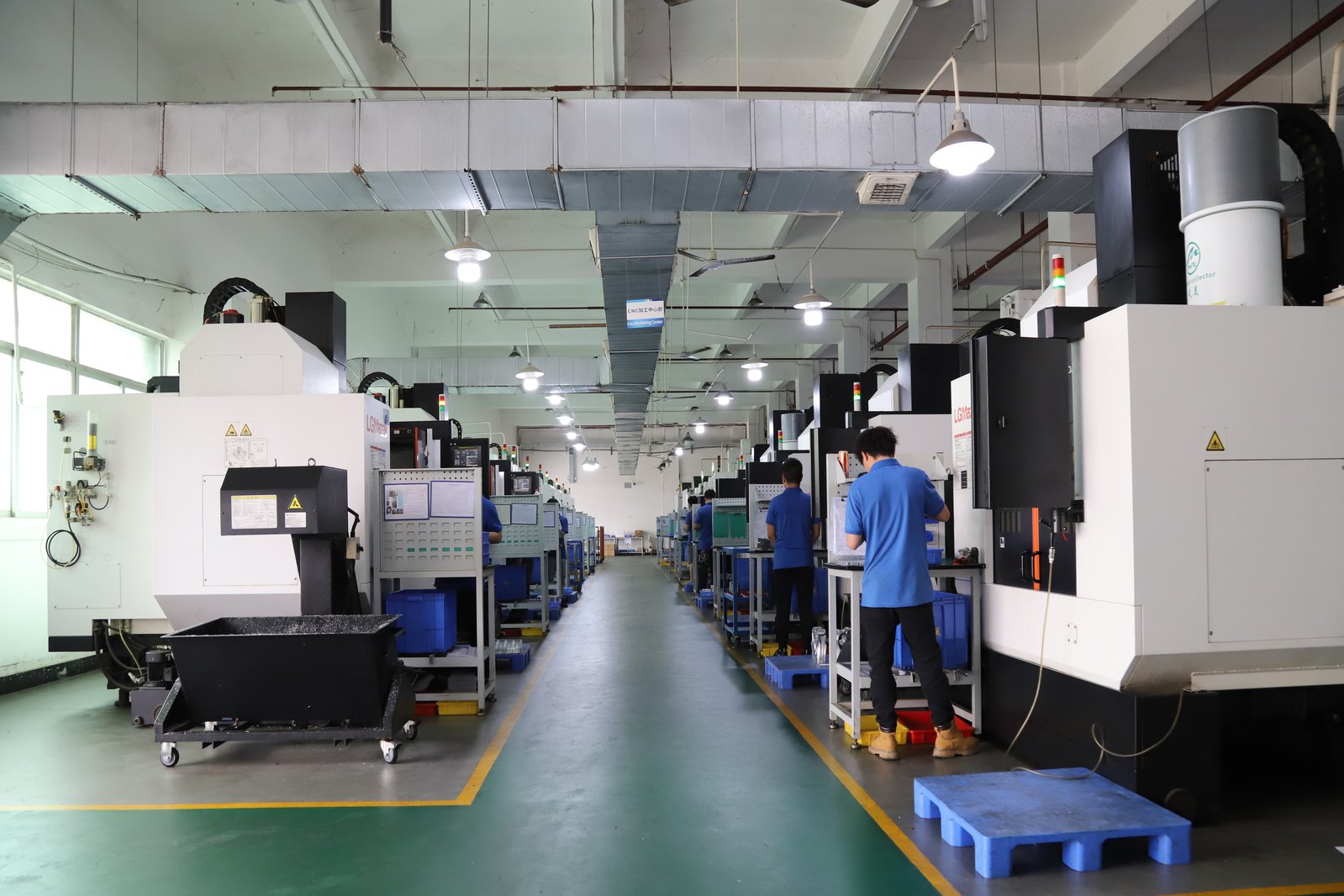
Every other machining order's total cost is dominated by parts and process; a five-axis order's total cost is dominated by the program. The CAM work, the post-processing, the simulation, and the first-article iterations that get the program right can rival the machining cost on short runs, and unlike a program for a flat-face part, a five-axis program is fragile: a small model change can mean a full regeneration, and a surface defect is often not reworkable at all, because a curved form that missed its band cannot be welded and re-cut without destroying the surface. This guide applies the total-cost frame to five-axis work: why the program dominates the model, what the program costs across the life of an order, how to price surface verification proportionately, what a surface failure is really worth when rework is not an option, and how to compare the routing options and suppliers by total cost.
Why does five-axis TCO look different from every other machining TCO?
The axis difference is not a matter of degree — it is a change in where the cost sits. On a 3-axis or 4-axis part, the machining produces the value; on a five-axis sculpted part, the program produces the surface, and the machining merely executes it. Three consequences follow for the total-cost model:
- The program is the largest controllable line, and it is invisible on the quote. CAM programming for five-axis surfaces, post-processing for the specific machine, and simulation verification are real hours — often the largest engineering cost in the order — yet they appear on few quotes as a line item. The quote that hides them has not made them cheaper; it has made them undiscoverable until the first change order or the first re-run.
- The program's fragility makes revisions the model's hidden compounder. A five-axis program is a delicate construction — toolpaths, axis coordination, post-processor behavior — and a small model change can invalidate large parts of it. Where a 3-axis revision is a parameter tweak, a five-axis revision can be a regeneration, a re-simulation, and a new first article. Across a program with several revisions, the accumulated program cost can exceed the original program's cost several times over, and that compounding is a line the model must carry.
- Surface failure is often terminal, not reworkable. A flat-face part that drifts can be re-cut or reworked; a sculpted surface that misses its band is frequently scrap, because adding material to a curved form to re-cut it is not a practical operation. The failure cost on five-axis work is therefore closer to titanium's capitalized-loss model than to aluminum's rework model — the part, the program hours, and the machine time are all lost together.
The model's first discipline: weight the program line correctly. A five-axis TCO that prices only parts and machine hours is a 3-axis model wearing a five-axis label, and it will mislead exactly where the money is.
What does the program really cost across a five-axis program's life?
The program's true cost is a lifecycle, not a first-version price, and the lifecycle has four stages that belong in the model:
- Initial development. The first CAM programming, post-processor setup, and simulation of the toolpaths — the cost of getting from model to a program that runs. On sculpted work this is the largest single engineering cost, and it is spent before any metal is cut.
- First-article validation. The first machined part tests the program against the model, and five-axis first articles often need iterations: a toolpath refined, an axis coordination corrected, a surface that came off slightly off-band requiring a program adjustment. Each iteration costs setup and inspection time, and the number of iterations is a direct measure of the supplier's five-axis experience.
- Revision compounding. Every model change regenerates part of the program, and on a sculpted part the regenerated portion is often larger than the changed surface, because toolpaths interact across the form. The revision's true cost is the regenerated scope plus re-simulation plus re-validation, and across multiple revisions this stage can dominate the program's lifecycle cost.
- Re-run and reproduction. When the program is stable and production repeats, the marginal cost per run is small — the program is an asset that amortizes across volume. This is the stage where five-axis work becomes economical, and it is the argument for investing in the earlier stages rather than skimping on them.
The buyer-side implication: a five-axis program is an asset with a lifecycle, and the total-cost comparison between suppliers should include how efficiently each moves through the stages — programming hours, first-article iterations, and revision handling — because those efficiencies determine the delivered cost per good part more than the machine-hour rate does.
How do you price surface verification into the five-axis TCO?
Surface verification is the five-axis model's inspection line, and its cost structure rewards proportionality:
- Verification depth is a choice with a price. Discrete point measurement samples the form at a defined set of locations; scanning compares the whole surface and produces a deviation map. Scanning costs more and proves more, and the right choice depends on what the surface's function requires. A sealing surface or a fit surface earns scanning; a cosmetic sculpted area may earn point sampling with a denser check at the critical regions. The model prices the verification plan the part actually needs, not a blanket method.
- Verification cost concentrates where failure is expensive. On a sculpted part, the regions that matter — blend areas, transition zones, fit surfaces — justify denser verification, while benign areas carry a lighter check. The proportional plan targets the verification budget at the failure modes, which is the same logic as any inspection plan, applied to a form instead of to features of size.
- The verification cost is small against the failure it catches. A deviation discovered at inspection costs a program fix and a re-cut; the same deviation discovered at assembly, or in service, costs an assembly or a field failure. The inspection line is the model's cheapest insurance, and the supplier whose inspection plan is documented and proportional justifies a lower expected-failure input than one whose surface checks are an afterthought.
The modeling habit: price surface verification as a proportional plan — the method matched to the function, the density matched to the risk — and treat the cost as insurance against the terminal failure that curved surfaces cannot be reworked out of.
What is a surface failure really worth when rework is not an option?
A failed five-axis surface is one of the most expensive single events in machining, because the rework path that saves other parts does not exist:
- The failure is terminal for the part. A flat face that missed tolerance can often be re-cut or reworked; a sculpted surface outside its band cannot be built back up and re-cut without destroying the form and the finish. The part is scrap, and the scrap is total — the material, the program hours invested, the setup, and the machine time are all lost together.
- The program may be implicated, which raises the stake. If the failure came from the program rather than a one-off process slip, the same defect will recur on the next part — the failure is not one part lost but the batch at risk until the program is corrected and re-validated. The cost of a program-caused surface failure includes the re-validation that proves the fix.
- The delay compounds on the critical path. A five-axis scrap means a new blank, possibly a program fix, and a new first article before the run can resume, and five-axis parts are often the critical path parts, which makes the delay's schedule cost disproportionately high.
- The expected cost belongs in the model. The terminal failure cost — part plus program exposure plus delay — weighted by the failure probability, is the model's largest risk line, and the probability differs by supplier with their simulation discipline, first-article practice, and verification depth. A supplier who simulates before cutting, validates the first article against the model, and verifies the critical regions earns a lower probability input than one whose process is looser.
The buyer-side point: on five-axis work, treat surface failure as terminal by default — assume the scrap is total, price the batch exposure when the program is implicated, and let the supplier's process evidence set the failure probability. That is how the model turns the most expensive event in machining into a manageable line.
When does five-axis beat 3+2 on total cost, and when does it not?
The routing comparison on five-axis-capable work is between 3+2 positional machining and true simultaneous five-axis work, and the TCO decides which the part needs:
- 3+2 — five-axis access with three-axis economics. Tilting to a fixed compound angle and cutting each face as a 3-axis operation reaches most angled and multi-face geometry at a fraction of the programming and machine cost of continuous work. For parts whose surfaces are flat or singly curved — most angled brackets, pads, and access features — 3+2 is the lower-total-cost route, and the model should say so rather than letting the prestige of "5-axis" carry the decision.
- Simultaneous five-axis — the higher-cost route for geometry that demands it. Twisted airfoils, sculpted forms, and surfaces that need continuous tool orientation cannot be made with 3+2, and for those parts the simultaneous route's higher program and machine costs are not a premium but a requirement. The model's job is to confirm that the geometry genuinely demands the route before accepting its cost.
- The over-specified route is priced honestly. A part that 3+2 can make, routed to simultaneous five-axis work, pays the higher program cost, the higher machine rate, and the longer cycles for capacity the geometry does not use. The model prices that over-specification and lets the total decide, which usually sends the part back to the route its geometry actually needs.
The closing discipline of the five-axis TCO: run the routing comparison — 3-axis where the geometry allows, 3+2 for angled access, simultaneous for continuous surfaces — on one model with the same assumptions, and let the totals choose. The supplier that helps run that comparison honestly is the supplier whose five-axis work is worth its premium; the one that confirms every axis guess is selling hours, not judgment.
How do you compare two five-axis suppliers by total cost?
Two five-axis suppliers can quote the same surface part at similar prices and differ sharply in total cost, and the model surfaces the differences through four inputs:
- Programming efficiency and experience. The supplier's CAM workflow, post-processor library, and history of similar five-axis parts predict programming hours and first-article iterations — the two lines where five-axis suppliers diverge most. History, or a trial order, is the evidence that sets these inputs.
- Simulation discipline. A supplier who simulates before cutting has a lower expected rate of program-caused failures and collisions — the model's largest risk events. The simulation record is the evidence that justifies the lower probability input.
- Verification proportionality. The supplier's inspection plan — what is measured, how, and at what density on the critical regions — determines both the verification cost line and the expected-failure line. A documented, proportional plan beats a blanket promise on both.
- Revision economics. How the supplier scopes and prices model changes — as program impact with re-simulation and re-validation, or as a new job — determines whether revisions compound or stay controlled. The revision terms are a total-cost input with a long tail across a program's life.
The principle that closes the loop: on five-axis work, the total-cost difference between suppliers lives in the program — its development, its validation, its revision handling, and its discipline — not in the quoted price. A model that carries the program lifecycle, prices verification proportionally, treats surface failure as terminal, and compares the routing options symmetrically is the instrument that sees the difference, and the difference, on five-axis work, is where the money is.
The result is a model that treats the program as the asset it is, the surface as the terminal risk it is, and the supplier's process discipline as the probability input it should be — the only honest way to price work where the program, not the part, carries the value, and where the cheapest quote is rarely the cheapest program.
A five-axis program is priced as an asset, but it lives inside the same cost model as any machined part — the total-cost-of-ownership overview on this site shows how program cost connects to the other lines, and the 4-axis guide covers the parts that stop short of continuous five-axis work.
Frequently Asked Questions
Why does the program dominate five-axis total cost?
Because on a sculpted part the program produces the surface — CAM development, post-processing, and simulation are real hours, often the largest engineering cost in the order, yet they rarely appear as a quote line. The program's fragility then compounds through revisions: a small model change can mean regeneration, re-simulation, and a new first article, making the program the model's largest controllable line.
How much does a five-axis program cost across an order's life?
Its lifecycle has four stages: initial development (the largest single engineering cost), first-article validation (iterations that measure the supplier's experience), revision compounding (where regenerated scope plus re-validation can exceed the original program across several changes), and re-run reproduction (where the stable program becomes an asset that amortizes across volume). Suppliers differ most in how efficiently they move through the first three.
How should I verify a sculpted surface without overpaying?
With a proportional plan: point measurement samples the form at defined locations, scanning compares the whole surface with a deviation map, and the choice follows the function — sealing and fit surfaces earn scanning, cosmetic areas earn point sampling with denser checks at critical regions. The verification budget targets the failure modes, which keeps the cost proportionate to the risk.
Why is a surface failure usually scrap rather than rework?
Because a curved form that missed its band cannot be built back up and re-cut without destroying the surface. The failure is terminal for the part — material, program hours, setup, and machine time are lost together — and if the program caused it, the same defect threatens the batch until the program is corrected and re-validated. Five-axis surface failure follows the capitalized-loss model, not the rework model.
When should I choose 3+2 instead of full five-axis machining?
Whenever the geometry allows it: parts whose surfaces are flat or singly curved — angled brackets, pads, and access features — reach everything they need through 3+2 positional work at a fraction of the programming and machine cost. Full simultaneous five-axis is required only for twisted, sculpted, and continuously curved surfaces, and the TCO model should confirm the geometry demands the route before accepting its cost.
What is the minimum order quantity for five-axis machined parts?
One piece, and on five-axis work the single part is also the cheapest way to calibrate the whole TCO: it tests the programming efficiency, the first-article iteration count, the verification plan, and the surface result against the model, generating the first real data point before a production program commits to a supplier whose program economics were otherwise an assumption.